

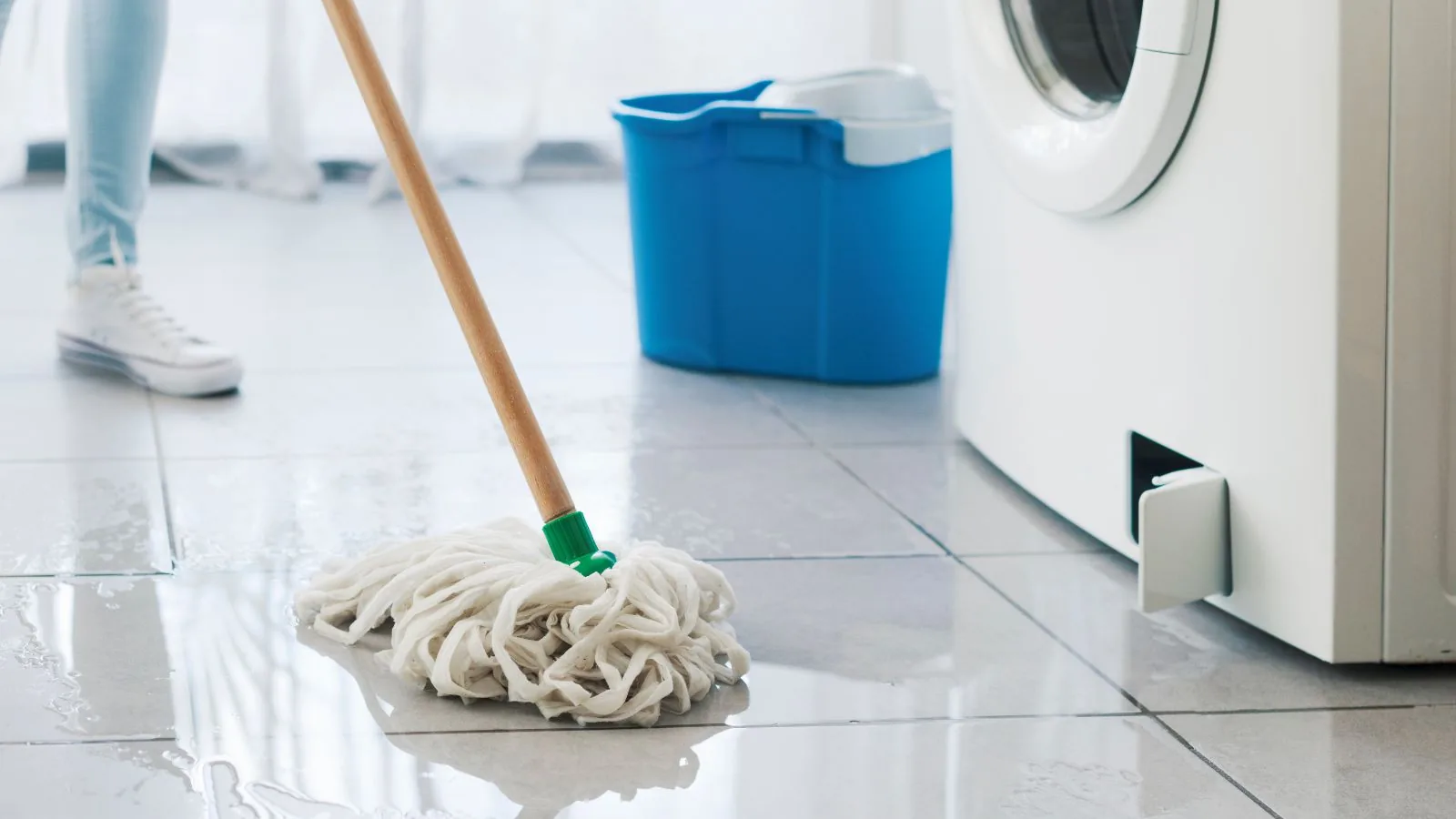
An appliance leak usually starts small and ends up under flooring. A washer hose that splits or a dishwasher that overflows can put water into a room before anyone notices. Turn off the supply valve behind the appliance, unplug it if the outlet is dry and call the 24/7 line.
This page covers failures of the appliance itself or its supply and drain lines. Damage to cabinets and the sink area is covered on the kitchen water damage page, and leaks from an air conditioner drain have their own page on AC leak damage.
When an appliance leak is an emergency
A leak is urgent if water is still flowing, if it has reached more than one room, or if it is moving under flooring. Washing machine hoses and dishwasher supply lines can empty a lot of water while the household is out. Hoses to refrigerator ice makers leak slowly behind the unit for weeks and soak the subfloor.
The 24/7 line is open at night and on weekends, and same-day response is offered when crews are available.
The common culprits
Washing machine
A split hose or a failed inlet valve. Water pools behind the machine and runs into walls, and the room below can get a ceiling stain.
Dishwasher
A loose supply fitting, a bad door seal or a drain that backs up. Water goes under the cabinet and into the subfloor.
Refrigerator with ice maker
A line behind the unit, often a small plastic tube that slowly drips. Hardwood and laminate buckle in front of the fridge.
Water softener or humidifier
Overflows and slow weeps near the tank or the drain connection.
How crews handle an appliance leak
The appliance is pulled out so the wall and floor behind it can be checked. A moisture meter shows how far water traveled under flooring and into the bottom of walls. Dishwasher and refrigerator leaks often reach the subfloor, which is not visible without readings.
Standing water is extracted. Floors may be dried in place with mats and air movers, or flooring is lifted when it has soaked through. A dehumidifier pulls the rest of the moisture from the air. Walls are checked for wicking, and baseboards come off to let the wall bottoms dry.
Washers on an upper floor add one more step. The ceiling and walls in the room below are checked with a meter. The ceiling water page explains what happens when water gets through.
| Appliance | Hidden damage to check | Often saved |
|---|---|---|
| Washer | Subfloor, wall base, ceiling below | Tile and sheet vinyl |
| Dishwasher | Cabinet floor and subfloor | Cabinets, if dried in place |
| Refrigerator | Flooring and subfloor under the unit | Floor, if caught early |
| Water softener | Drain area and wall base | Concrete and tile |
Readings determine what stays.
Appliance water still spreading? Call the 24/7 line and tell us which one.
☎ Call (740) 231-9132Safety before you dry
Keep these in mind while you wait for help.
- Unplug the appliance only from a dry spot, or turn off its breaker.
- Do not stand in water to reach a plug or the panel.
- Close the supply valve behind the appliance.
Why appliance leaks are common in Athens rentals
About three in four occupied homes in Athens are rented, according to Census figures, and rentals are full of older washers, hoses and shared drain lines. Tenants often do not know the shutoff valve exists. If an appliance in a rental leaks, tell the landlord at once, photograph the damage and the appliance, and keep a record of when you notified them.
Ohio landlords must keep plumbing and appliances they supply in good and safe working order under Ohio Revised Code 5321.04. Who pays for the damage depends on whose appliance it was and what caused the failure. Renters insurance can cover your own belongings.
Replacing a hose before it fails
- Check the age of washing machine hoses and replace rubber hoses with braided ones every few years.
- Shut off the supply valves behind the washer when you leave on a long trip.
- Pull the refrigerator out once a year to check the water line and the floor.
- Do not run the dishwasher or washer when nobody is home.
What affects the cost of an appliance leak
The appliance repair or replacement is not part of the restoration bill.
| Factor | Why it changes the scope |
|---|---|
| How long the leak ran | A slow weep that soaked the subfloor costs more than a quick spill. |
| Flooring type | Tile, vinyl, laminate and hardwood respond differently. |
| Rooms affected | Upper-floor leaks reach the ceiling below. |
| Drying days and equipment | Hidden subfloor moisture takes longer to dry. |
| Rebuild scope | Flooring, trim and cabinet repair are priced separately. |
The scope and price are laid out before work starts. To get yours, call (740) 231-9132.
Sudden appliance failure is often covered, while a slow leak that went unnoticed is often excluded. Ask your insurer before filing.
Frequently asked questions
Do you handle appliance leak emergencies at night or on weekends in Athens?
Yes. Appliance leaks often start overnight, so the phone is answered at every hour. Crews respond the same day when they are available.
Can I unplug the appliance if the floor is wet?
Only if the outlet is dry and you can reach the plug without stepping in water. Otherwise turn off the breaker from a dry spot or call the electric utility.
The washer valve broke. What do I do first?
Shut off the main water valve if the washer valve will not close. Then call the 24/7 line. A broken valve can keep running until the main is closed.
How do I know if water went under the flooring?
Look for buckling, soft spots, a musty smell or a stain below. A moisture meter finds water you cannot see.
Who pays when a rental appliance floods the unit below?
It depends on the cause and the lease. Tell your landlord at once and ask whether your renters insurance should be notified. A lawyer or the tenant's legal aid office can help with disputes.