

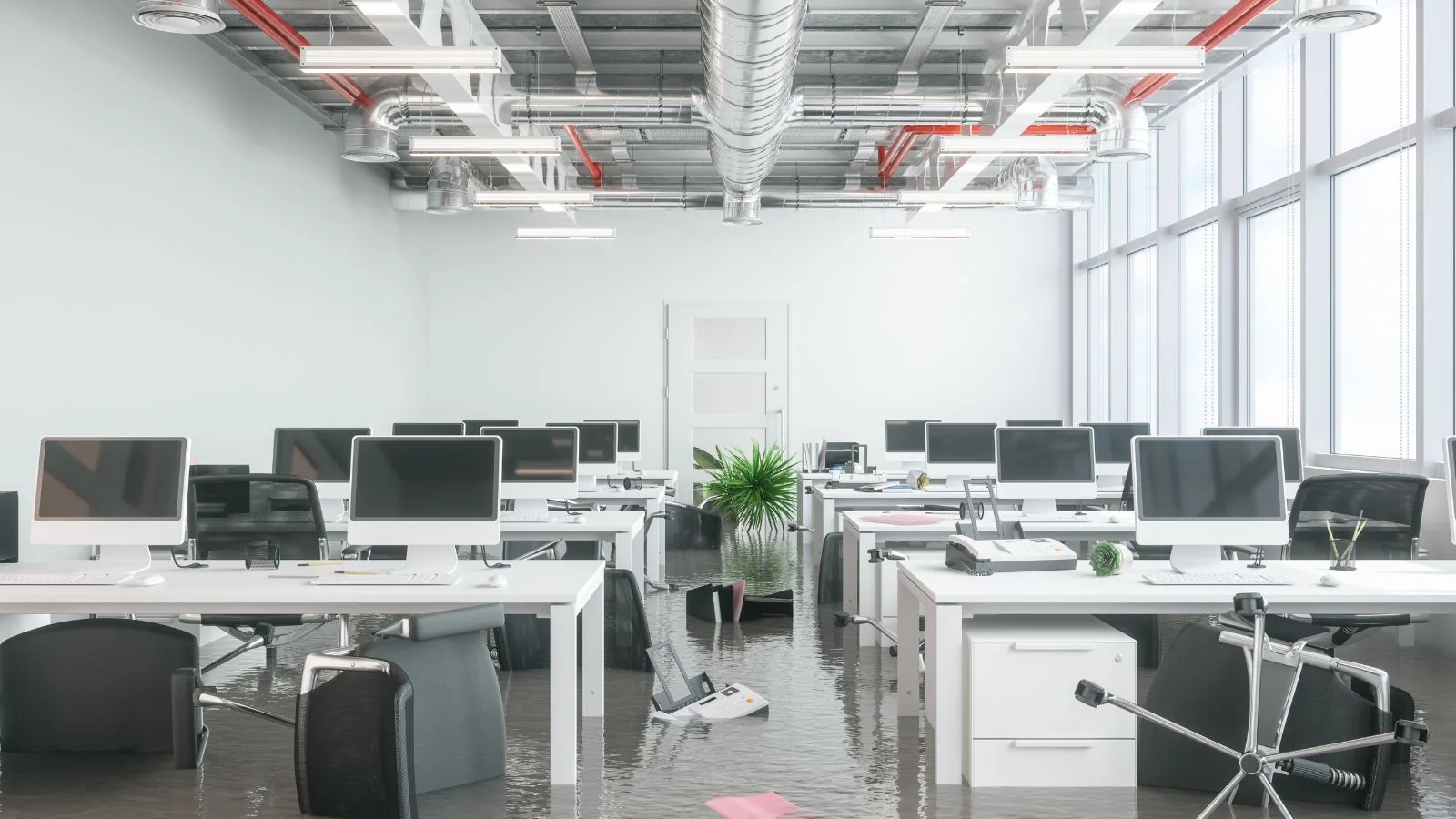
Commercial water damage is a business problem as well as a building problem. Stop the source, shut off power to wet areas if it is safe, and call the 24/7 line. Move inventory, files and electronics out of the wet area, and photograph everything before anything is moved.
This page is for owners and managers of shops, offices, restaurants, apartment buildings and similar properties in Athens. Homes are covered on the other service pages.
When a commercial water loss is an emergency
A commercial loss is urgent when water is in a space people use, when inventory or records are exposed or when the building cannot open. Water reaches adjoining units quickly in a multi-tenant building, so same-day response matters. Crews can respond after hours and on weekends, when many commercial breaks happen.
Same-day response is offered when crews are available. The dispatcher will ask about the size of the space, the source and any access restrictions.
Safety in occupied buildings
Keep customers and staff out of wet areas. Water near electrical panels, equipment or elevators is a hazard. If a sprinkler system activated, call the fire department and the system provider first. Do not enter an area with standing water and live power.
How commercial restoration differs from a home job
The equipment is the same, but the scale and the stakes change. Large rooms need more air movers and dehumidifiers, and drying often has to happen while the business runs around it. Crews work in phases to limit downtime, which can mean evenings or weekends.
Documentation matters more. Property managers, insurers and tenants all need records. Crews take photos, moisture readings and equipment logs and organize them by unit or room, so a building owner can show what was wet and what was done.
| Building type | Common issues | What helps |
|---|---|---|
| Retail and restaurants | Kitchen supply lines, drains, roof leaks | Fast extraction, working around inventory |
| Offices | Supply lines above ceilings, HVAC condensate | Protect electronics, check ceilings and walls |
| Apartment buildings | Upstairs unit leaks reaching units below | Check every unit below the source, coordinate tenants |
| Older downtown buildings | Long supply runs, large roofs, mixed construction | Moisture mapping across floors |
Every building needs its own assessment.
Why Athens buildings need a plan
Athens has an unusual mix of property. Older buildings in the downtown historic district along North Court Street share walls and roofs, apartment buildings around Ohio University serve many tenants, and small businesses line East State Street. A burst pipe or a roof leak in one unit can reach several.
Because roughly three in four occupied homes in the city are rentals, many apartment buildings have multiple households and a landlord making repair decisions. Keep tenants informed, since they may need to move belongings and notify their own insurers. Landlords in Ohio must keep plumbing and the premises in good and safe working order under Ohio Revised Code 5321.04, which makes quick response part of the job.
Business interruption and your records
Many commercial policies include business interruption coverage, but terms vary. Ask your insurer what is covered and what documentation is needed. Keep a list of inventory, equipment and lost days, and save invoices for emergency services.
Crews can provide moisture logs, photos and daily notes that show the timeline. Nobody outside your insurer can promise how a claim will be handled.
Water loss at your business? Call the 24/7 line before it reaches the next unit.
☎ Call (740) 231-9132Mixed-use buildings in Uptown Athens often have apartments above shops, which changes how drying is planned.
Commercial losses follow the same ANSI/IICRC S500 framework as homes, with added attention to occupied space. For hazards in the workplace, OSHA publishes guidance on wet floors, electrical safety and cleanup after floods.
Working around tenants and customers
In a multi-tenant building, crews check adjoining units and shared walls and ceilings. They coordinate access with the property manager. Quiet drying equipment, floor protection and phased work help keep part of the building open.
For a tenant with water in a leased space, the lease decides who pays. Notify the landlord quickly and ask who handles the insurance claim. If your problem is a plain residential leak, the burst pipe page covers the first steps.
What affects the cost of commercial water damage
Commercial scopes are measured in space, systems and days of downtime.
| Factor | Why it changes the scope |
|---|---|
| Area affected | Large open areas need more equipment. |
| Building systems | Sprinklers, elevators and electrical gear change the plan. |
| Contents and inventory | Stock, files and equipment may need to be moved or cleaned. |
| Time constraints | After-hours work and phased drying change setup. |
| Rebuild scope | Ceilings, walls, flooring and finishes are priced separately. |
A real figure needs a look at the damage. Call (740) 231-9132 and scope and price are explained before work starts.
Property and business interruption policies vary widely. Ask your insurer what applies and keep records.
Frequently asked questions
Do you handle commercial water damage emergencies at night or on weekends in Athens?
Yes. A water loss in a shop or building does not follow business hours, so the commercial line does not either. Same-day response is offered when crews are available.
Can you work while my business stays open?
Often in phases. Crews can isolate wet areas, protect floors and schedule noisy work for off hours. Tell the dispatcher about your hours.
Do you provide documentation for my insurer?
Crews record photos, moisture readings and equipment logs for each job. Your insurer decides what it needs.
Who is responsible in an apartment building?
Responsibility depends on the cause and the lease. Landlords in Ohio have duties to keep plumbing in good working order. Tenants should notify the landlord and their own insurer.
Does a sprinkler discharge count as a water loss?
Yes. Call the fire department and the system provider first, then the restoration line. Sprinkler water is often treated like clean water at first but can degrade quickly.