

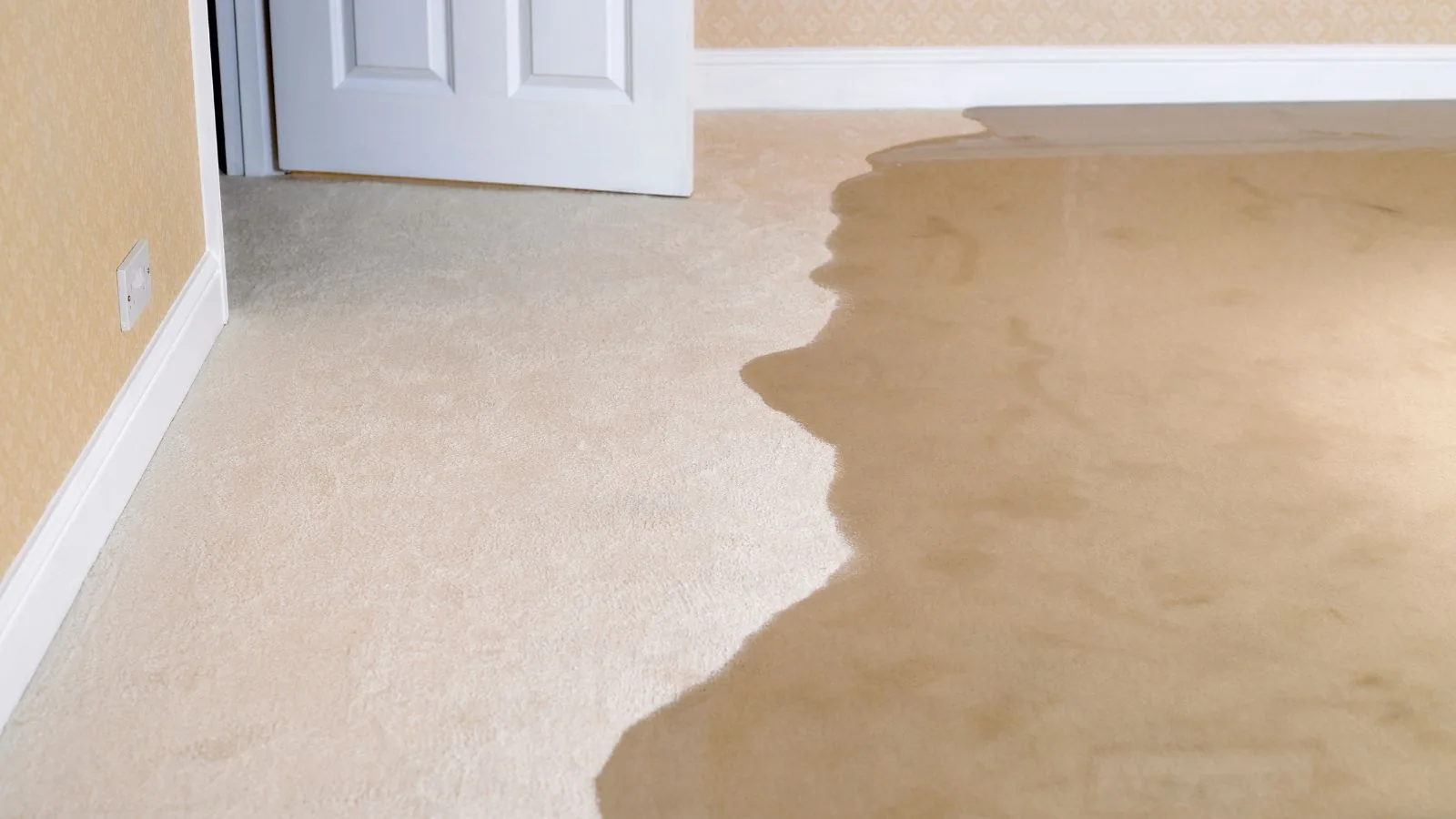
Wet carpet feels like a simple problem, but there are two layers to deal with. The carpet is the surface, and the pad underneath is a sponge. This page covers how water is removed from carpet, what happens to the pad and when carpet has to be replaced.
Carpet in a room with deep water is first a job for extraction. The water extraction page explains how crews pull the water out before they dry the carpet.
Carpet and pad: what usually survives
Carpet fibers and backing can handle water. The pad is different. Foam and rebond pad hold water, take days to dry and can hold contamination. In many jobs, the carpet is dried in place or lifted and dried while the pad is replaced.
If the water was clean and the carpet was extracted quickly, the carpet is often saved. If the water was contaminated, or the carpet stayed wet for days, it is more likely to be removed.
| Water source | Usual carpet outcome | Usual pad outcome |
|---|---|---|
| Clean supply line or appliance | Often dried or lifted and reinstalled | Often replaced |
| Washing machine or dishwasher overflow | Often cleaned and dried | Replaced |
| Floodwater or sewage | Removed | Removed |
| Slow leak over days | Often replaced if staining or odor sets in | Replaced |
The final decision comes from the water category and the readings.
How crews dry wet carpet
Crews extract water with a weighted extractor, lift the carpet at a corner and check the pad and tack strip. If the pad is clean and the carpet can be dried, they set air movers and a dehumidifier and float the carpet on air so that it dries from both sides. If the pad is saturated, it is cut and removed.
Moisture readings on the carpet, the pad and the subfloor tell the crew when drying is done. A damp subfloor under new carpet can cause odor and staining, so the subfloor must be dry before anything goes back.
Carpet over concrete in a basement presents another problem. Concrete holds water and releases it slowly, so the carpet may feel dry while moisture rises from the slab. The basement page covers that situation.
When carpet should come out
Carpet is removed when the water was a Category 3 source such as sewage or floodwater, when it has been wet too long to dry, when the backing has separated or when a sour smell will not clear. Taking out a small section and patching can work in some cases, but the patch may not match.
If carpet is being removed, ask whether the pad and the tack strip are also being replaced. New pad over a damp subfloor will not solve the problem.
Musty smells after a wet carpet
A musty smell in a room that had wet carpet means moisture is still present. It may be in the pad, the subfloor or the wall base. Cleaning the carpet will not fix that. A moisture meter and a thermal camera find where the water is hiding.
If you see dark growth on the carpet or the wall, tell the crew. It is a separate job from drying, and keeping the area dry in the meantime helps.
Carpet soaked and smelling? Call and describe the room and the source.
☎ Call (740) 231-9132The ANSI/IICRC S500 standard treats carpet and pad differently from hard surfaces and ties the decision to the water category. That is why clean-water carpet is often dried and contaminated carpet is removed.
Safety with wet carpet
Keep these in mind while you wait for help.
- Keep children and pets off carpet that touched a drain or floodwater.
- Wear gloves and boots when lifting wet carpet.
- Turn off power to outlets in the wet area if you can reach the panel from dry ground.
Carpet in student rentals and older Athens homes
Athens has many rented houses and apartments with wall-to-wall carpet, and a leak in one often reaches a unit below. Take photos of the carpet and the source, tell the landlord and keep a written record. The landlord decides who handles replacement, but you can protect your belongings and your renters insurance claim.
In older houses, carpet is sometimes laid over hardwood. If that is the case, check the wood under the carpet, since it may be dry or may be cupped. The hardwood floor page covers what happens to wood.
What affects the cost of carpet restoration
Saving carpet costs less than replacing it, but only when the water allows.
| Factor | Why it changes the scope |
|---|---|
| Water category | Clean water allows carpet to be saved, contaminated water does not. |
| Time before extraction | Carpet that sat wet for days is often replaced. |
| Area and depth | A whole room differs from a spot. |
| Pad and subfloor | Replacing pad and drying the subfloor are separate. |
| Replacement | New carpet and installation are priced separately. |
The dispatcher explains what the job involves and what it costs before work starts. Call (740) 231-9132.
Insurance may cover sudden losses and often excludes slow leaks and floods. Ask your insurer.
Frequently asked questions
Can wet carpet be saved?
Often, if the water was clean and the carpet was extracted and dried quickly. The pad is usually replaced.
How long can carpet stay wet before it must be replaced?
There is no fixed number. Clean water that is removed within a day often leaves carpet salvageable. After a few days, odor and contamination become more likely.
Do I need to replace the pad?
Usually, yes. Pad holds water and contamination, and it costs less to replace than to dry.
Why does my carpet still smell after drying?
Moisture may remain in the pad or subfloor. A moisture reading finds it.
Is wet carpet an emergency?
Soaked carpet is urgent. The line is answered 24/7, and same-day response is offered when crews are available.