

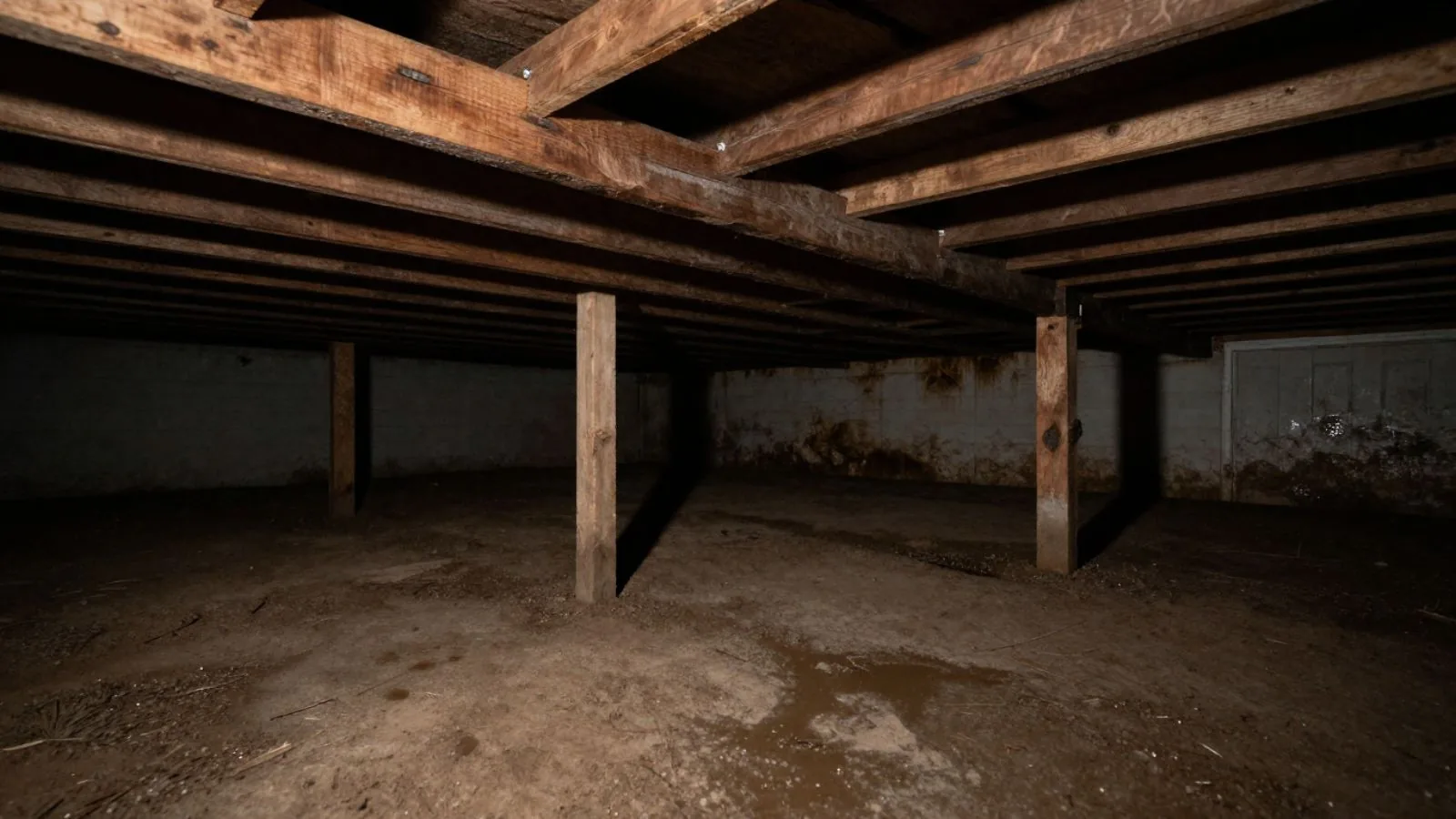
A crawl space is the shallow void under a floor, and when it gets wet, the water reaches framing and flooring that nobody sees. This page covers pumping a crawl space, drying the joists, subfloor and insulation, and repairing what the moisture damaged.
Sources vary. A supply line may have split under the house, groundwater may have seeped in after heavy rain, or a drain may have leaked. A split pipe that burst under pressure is on the burst pipe page, and rising water from outside is on the flood damage page.
Signs that a crawl space is wet
- Standing water, mud or wet soil visible through the access panel.
- Insulation that is sagging, dark or falling off the floor above.
- Floors that feel soft, bouncy or cold over one area.
- A damp, earthy smell that rises through floor vents.
- Doors and drawers that stick in humid weather.
- Wood joists that look dark, wet or fuzzy.
If you see standing water and the pipe is the source, shut off the water first. If the water came after heavy rain, mark the level, take photos and call. Do not crawl into a space with standing water near wiring.
How crews pump and dry a crawl space
Crews start by entering safely and checking the electrical components. A submersible pump removes standing water and a wet vacuum handles the rest. Wet insulation is stripped because it holds water against the floor above, and a vapor barrier that is torn or saturated is evaluated.
Joists and subfloor are checked with moisture meters. Small air movers and a dehumidifier are set so that the airflow reaches the whole space, which is harder in a tight void than in a room. Readings are taken every day until the framing reaches its dry standard.
If water got into the living space above, the flooring is checked too. The hardwood floor page explains why floors above a wet crawl space can cup.
| Condition under the house | Typical response | What comes next |
|---|---|---|
| Standing water from a leak | Shut off supply, pump, dry framing | Plumbing repair, new insulation |
| Seepage after heavy rain | Pump, dry and document the water line | Drainage or grading fixes by a contractor |
| Wet insulation only | Remove and dry the framing | Replace insulation and check the vapor barrier |
| Damp subfloor over a vented space | Check ventilation and readings | Dry and monitor |
Readings decide the plan.
Why crawl space moisture is different from a flooded basement
A basement is a room you can walk through, and a crawl space is a cramped void that crews have to work in on their knees. Equipment is smaller, and it takes longer. The bigger difference is what lies above. A crawl space is usually under a main floor, so moisture can rise into flooring, insulation and wall bottoms.
Water in a crawl space can also be there for months before anyone sees it. Look under the house after periods of heavy rain, and pay attention to the area around plumbing.
Honest limits
Restoration dries and repairs. It does not regrade a yard, add drains, install a sump pump or encapsulate a crawl space. If water keeps coming in with each rain, a drainage or foundation contractor needs to fix the cause. Without that, drying only delays the next soaking.
A sump pump or sealed vapor barrier can be part of the fix, but those decisions belong to the contractor you hire for the cause.
Water under the house? Call and tell us what you see through the access panel.
☎ Call (740) 231-9132Crawl spaces in the Far East Side neighborhood are one place where this comes up.
Safety in a crawl space
Keep these in mind while you wait for help.
- Do not enter a crawl space with standing water near wiring.
- Wear a respirator and gloves if you must enter.
- Tell someone where you are before you go in.
Crawl spaces in older Athens houses
Many older houses near downtown and along East State Street sit on shallow crawl spaces with dirt floors and vents, and plumbing that runs through them. Some of those houses have additions with different foundations. If you have one, check it after storms and keep the pipes insulated through the winter.
A leak under the house can run long before it shows up in a utility bill, so any soft spot in the floor above deserves a look. The frozen pipe page explains why pipes in unheated crawl spaces are at risk.
What affects the cost of crawl space cleanup
Access and size change the price as much as the water.
| Factor | Why it changes the scope |
|---|---|
| Access to the space | A tight opening slows everything. |
| How much water | Standing water needs pumping, damp soil needs drying. |
| Materials involved | Insulation, vapor barrier and joists each have their own response. |
| Drying days and equipment | Small equipment runs for days with daily checks. |
| What comes after | Insulation, barrier replacement and plumbing repairs are separate. |
No work starts before the price is explained. Call (740) 231-9132 and describe the damage.
Crawl space water from a burst pipe is often covered by homeowners insurance. Seepage from groundwater usually is not. Ask your insurer.
Frequently asked questions
Is a wet crawl space an emergency?
It is urgent when water is standing or when a pipe is the source. Call and describe what you see. The line is answered 24/7, and same-day response is offered when crews are available.
Can wet insulation stay if it dries?
Rarely. Fiberglass insulation that was soaked usually sags, loses its value and holds water against the floor above. Most crews remove and replace it.
How long does a crawl space take to dry?
Days, depending on the soil, the framing and the source. Readings decide when it is done.
Will the floor above be damaged?
It can be. Moisture rises into the subfloor and flooring, and hardwood or laminate can cup. A moisture meter shows how far it traveled.
Do you install vapor barriers or sump pumps?
Restoration covers drying and repair. For sump pumps, drainage or encapsulation, hire a contractor who does that work and coordinate with the dry-out.