

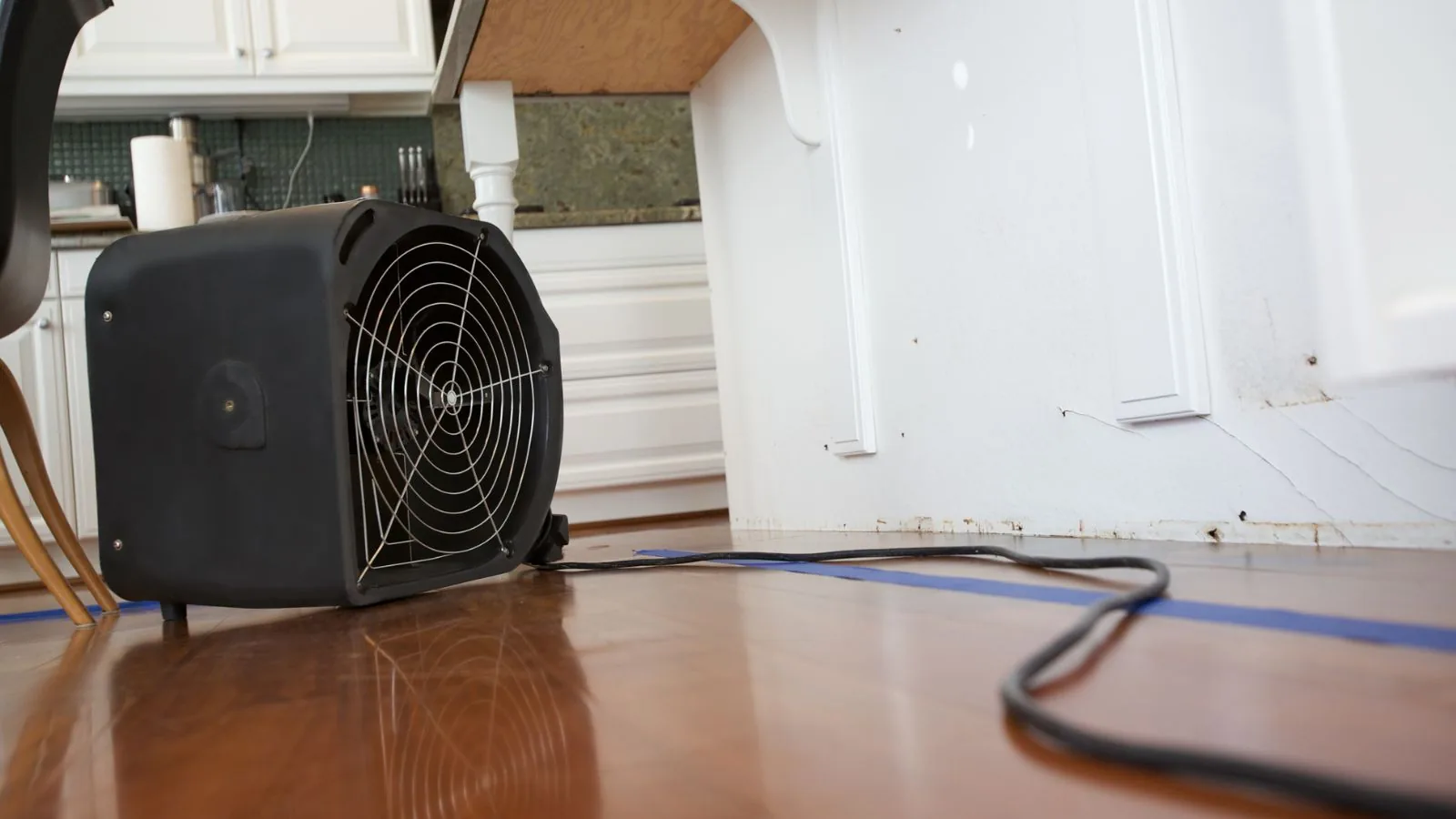
Kitchen water damage is mostly about what sits against the floor. Cabinets, toe-kicks, the dishwasher, the sink base and the subfloor under them all soak first. This page covers drying and repairing the kitchen after water gets in, and the part of a leak that happens inside cabinets and under the sink.
If the cause was an appliance failure, the appliance leak page covers the source. If a supply line burst under pressure, the first steps are on the burst pipe page.
Water under the sink and behind the cabinets
The most common kitchen leak starts under the sink. A loose drain fitting, a failed supply line, a leaking faucet or a disposal can drip into the cabinet base for weeks. By the time the door sticks or the base smells, the particleboard floor of the cabinet has often swollen.
A burst pipe under a sink can fill the cabinet and overflow onto the floor in minutes. Close the shutoff valves under the sink or the main valve and call. The water that overflows runs under the cabinets and reaches the subfloor.
What crews check in a wet kitchen
- Cabinet bases, toe-kicks and the back wall of the sink base.
- The subfloor beneath cabinets and appliances.
- The bottom of the drywall behind the cabinets and appliances.
- Dishwasher, refrigerator and range edges where water collects.
- Flooring, whether tile, vinyl, laminate or hardwood.
- The ceiling below, if the kitchen is on an upper floor.
How kitchens are dried
Crews remove toe-kicks and, where needed, drill small holes in the cabinet base to let air flow under the cabinet. Specialty equipment pushes dry air behind cabinets and into the wall cavity. Air movers and a dehumidifier handle the rest of the room.
Solid wood cabinets can often be dried in place. Cabinets made of particleboard or MDF swell when soaked and frequently need replacement, especially at the base. Laminate countertops can delaminate at the seam, and stone and solid surface countertops are not usually harmed by water. Crews check readings every day.
Because the subfloor sits under the cabinets, a kitchen dry-out sometimes requires removing a cabinet base or section of flooring. That decision comes from moisture readings and a look at how long the materials were wet.
| Material | Usually saved | Usually replaced |
|---|---|---|
| Solid wood cabinets | Dried in place when caught quickly | Warped or delaminated sections |
| Particleboard or MDF cabinets | Rarely, if soaked | Swollen bases and toe-kicks |
| Tile and vinyl flooring | Often, if the subfloor dries | Lifted or soaked underlayment |
| Hardwood or laminate | Sometimes, if dried quickly | Cupped or swollen boards |
Final decisions depend on readings.
Kitchen soaked and still wet? Call and describe the cabinets and floor.
☎ Call (740) 231-9132Cabinet and subfloor drying is measured by moisture readings under the ANSI/IICRC S500 approach, not by whether surfaces feel dry. Appliance manufacturers publish installation and supply line guidance, which is a good place to check the age of a hose.
Safety in a wet kitchen
Keep these in mind while you wait for help.
- Turn off the dishwasher, range and refrigerator breakers only from dry ground.
- Do not use gas appliances if water reached them.
- Close the shutoff valves under the sink.
Sink, dishwasher and ice maker leaks
Three kitchen leaks cause most of the trouble. A leaking sink supply or drain hits the cabinet base. A dishwasher with a loose supply fitting or a worn door seal leaks under the machine and into the subfloor. A refrigerator ice maker line can drip behind the unit for weeks, buckling the flooring in front of it.
Each leak has a different path. The crew follows the path with a moisture meter. Hardwood floors that run into the kitchen are covered on the hardwood page.
Kitchens in Athens rentals
Many Athens kitchens belong to rentals, and about three in four occupied homes in the city are rented. Tenants often do not know where the shutoff valves are. If a sink or dishwasher leaks in a rental, shut off the valve, tell the landlord and photograph the damage.
Landlords in Ohio must keep plumbing and supplied appliances in good and safe working order under Ohio Revised Code 5321.04. Put your notice in writing and keep a copy.
What affects the cost of kitchen water damage
Kitchens combine many materials in one small room.
| Factor | Why it changes the scope |
|---|---|
| Source and duration | A one-time overflow costs less than a slow leak. |
| Cabinet material | Particleboard swells and solid wood often dries. |
| Flooring and subfloor | Tile, vinyl, laminate and hardwood respond differently. |
| Drying days and equipment | Cabinet cavities need specialty drying. |
| Rebuild scope | Cabinets, countertops and flooring are separate estimates. |
Your price depends on the readings, and it is explained before work starts. Call (740) 231-9132 to begin.
Sudden kitchen leaks are often covered, while a slow drip over months often is not. Ask your insurer.
Frequently asked questions
Can wet kitchen cabinets be saved?
Solid wood cabinets often can if they are dried quickly. Particleboard cabinets that swell usually cannot, especially at the base.
How do I tell if water is under the cabinets?
Look for swollen toe-kicks, a musty smell, a soft or buckled floor or a stained wall behind the cabinet. A moisture meter confirms it.
Will the countertop need replacing?
Stone and solid surface usually survive. Laminate on particleboard can swell at seams.
Is water under the sink an emergency?
It is urgent if water is flowing. Close the shutoff valves, then call. The line is answered 24/7, and same-day response is offered when crews are available.
Does insurance cover a leak under the sink?
Sudden leaks are often covered while slow leaks often are not. Ask your insurer before filing.