

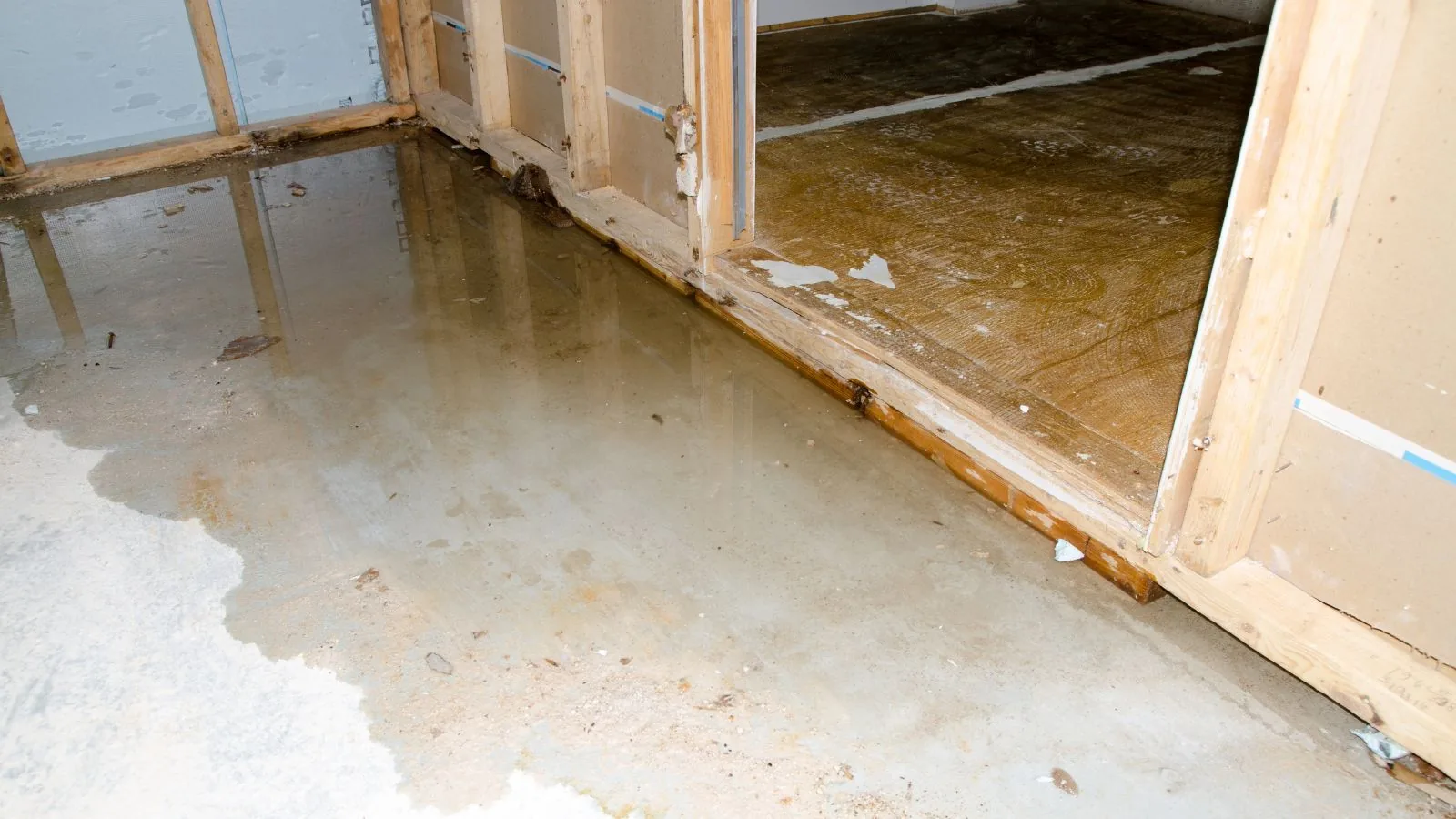
A slab leak is water escaping from a pipe that runs under or inside a concrete floor. Shut off the main valve, call a plumber to find the line and call the 24/7 line to start drying. The water will not stop until the supply is closed, and every hour it runs, more flooring and subfloor soak.
This page covers the damage left behind and how it is dried and repaired. The break itself is a plumbing job that may need leak detection equipment, and restoration works alongside it.
Warm spots, a high water bill or a damp floor: what it might be
Homeowners rarely say slab leak. They say the floor in one spot feels warm, the carpet near a wall is damp, the meter keeps spinning with everything off, or they can hear running water at night. Those are the signs of a leak under concrete, and the trade name for the problem is slab leak.
The restoration side of the work is structural drying, which removes the moisture that the leaking line pushed into the slab, flooring and walls. The sections below explain how that works.
When a slab leak is an emergency
Treat a slab leak as urgent when water appears on the surface, when flooring is soaking through or when the water bill suddenly jumps. A hot-water line leaking under a slab can also heat the floor.
Same-day response is offered when crews are available, and the 24/7 line is answered at night and on weekends. Shut off the water to the house until a plumber confirms the line.
How common are slab foundations in Athens?
There is no reliable local statistic to quote, so this page does not claim slab leaks are common or rare in Athens. Foundation types vary from house to house. Some homes have basements, some have crawl spaces and some sit on slabs, and an addition can have a different foundation from the original house. Check which type you have, because a house with a basement or crawl space leaks into that space instead.
If your home has a basement or a crawl space, see the basement water page or the crawl space water page. If you have a slab foundation, the signs on this page apply to you.
How restoration crews handle a slab leak
A plumber or leak detection technician finds the line first, using sound, pressure or thermal methods. Once the leak is located and shut off, crews check the flooring, subfloor and the bottom of walls with moisture meters and a thermal camera.
Carpet and pad over a wet slab are usually lifted. Hardwood and laminate can cup within days. Concrete holds water, so drying mats, air movers and dehumidifiers are used for days, and readings are taken from the slab as well as the flooring. Repairing the pipe may involve cutting the concrete, which has its own cleanup and drying needs.
Rerouting the line overhead, instead of repairing under the slab, is sometimes done by plumbers. That changes how much of the floor is opened. It is a plumbing decision, so ask your plumber.
| What you notice | What it can mean | First step |
|---|---|---|
| A warm spot on the floor | A hot-water line leaking under the slab | Shut off water, call a plumber |
| Damp carpet along a wall | Water coming up through the concrete | Pull carpet back, check readings |
| A water bill that jumps | A leak somewhere in the system | Check the meter with everything off |
| The sound of running water | A line under pressure leaking | Shut off and listen again |
A professional leak detection test confirms the source.
Think water is coming up through the floor? Call and describe what you see.
☎ Call (740) 231-9132Concrete holds and releases moisture slowly, and ANSI/IICRC S500 guidance accounts for that by tracking readings over several days. Locating the leak itself is a plumbing task and is separate from the drying work.
Safety with a suspected slab leak
Keep these in mind while you wait for help.
- Shut off the main water valve while you wait.
- Do not dig or cut concrete yourself.
- If you smell gas, leave and call the gas utility.
Why slab moisture takes longer to dry
Concrete is dense and slow to release water. A slab that has absorbed water from a leak can hold moisture for days after the leak is fixed. Putting flooring back too soon traps that moisture and leads to buckling or odor.
Crews use moisture meters on the surface and, where needed, tests that measure moisture coming out of the slab. Those readings, not the calendar, decide when it is safe to install flooring.
What affects the cost after a slab leak
The plumbing repair and the drying are separate jobs.
| Factor | Why it changes the scope |
|---|---|
| How long the leak ran | A long leak soaks the slab and the flooring above it. |
| Flooring type | Carpet, tile and hardwood respond differently. |
| Access to the line | Cutting concrete adds cleanup and drying. |
| Drying days and equipment | Slabs dry slowly and need monitoring. |
| Rebuild scope | Flooring and trim are priced after drying. |
Before work begins, you get the scope and the price in plain words. Call (740) 231-9132 now.
Insurance treatment of slab leaks varies. Some policies cover the resulting water damage but not the cost of finding or repairing the pipe. Ask your insurer.
Frequently asked questions
Do you handle slab leak emergencies at night or on weekends in Athens?
Yes. Night and weekend calls are welcome. Shut off the main water valve while you wait, and a crew comes the same day when one is available.
My floor feels warm in one spot. Is that a slab leak?
It can be, especially if the warm spot is on a line that carries hot water. A plumber can confirm with leak detection. Shut off the water to the house if the spot is spreading or the floor is wet.
How do I check whether my meter shows a leak?
Turn off every fixture and appliance, then watch the meter. If it moves, water is leaking somewhere. A plumber can isolate the line.
Does the slab have to be cut open?
Sometimes. A plumber may repair the pipe through the slab or reroute it. Ask about the options and the cleanup involved.
How long until I can install new flooring?
When the slab and subfloor readings reach the target, not before. Installing too early traps moisture and can ruin the new floor.