

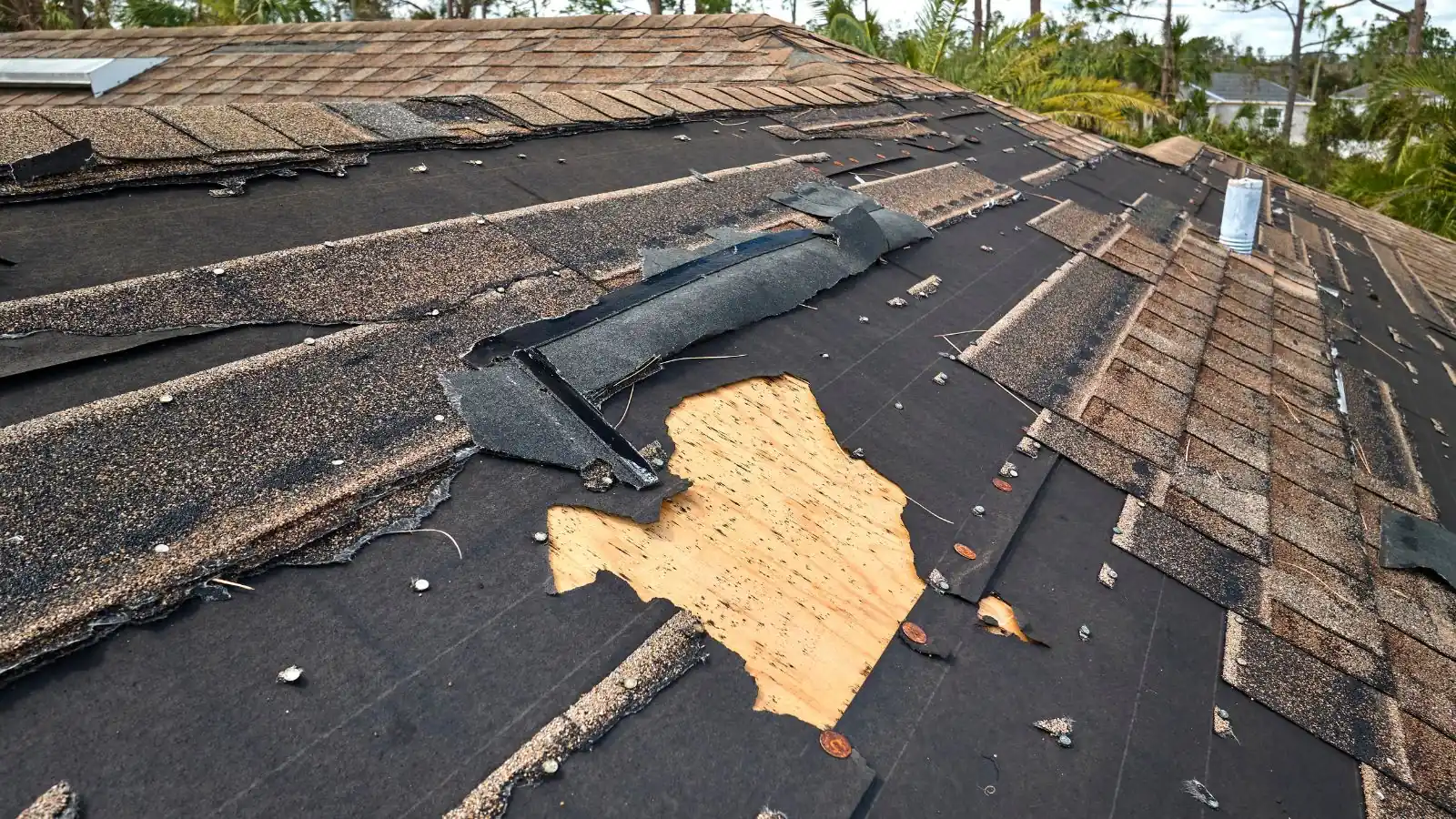
Storm water damage starts when wind and rain breach the building. A torn roof, a lifted shingle, a broken window, a failed gutter or a blown-in door can let water in, and it does not wait for the storm to end. Keep people away from downed lines and hanging debris, move belongings away from water and call the 24/7 line.
This page covers storm and rain intrusion through the building envelope. Rising water from rivers and runoff is covered on the flood damage page, and a plain roof leak that stains a ceiling is on the ceiling page.
When storm damage is an emergency
It is urgent when water is coming in, when the roof or windows are open to the weather or when ceilings are sagging. Same-day response is offered when crews are available, including during and right after storms.
After a storm, many homeowners call at once, so calling early helps. A dispatcher can explain what to do first and what a restoration crew can handle while a roofer or window installer handles the building.
Stay clear of hazards
Do not go on a damaged roof. Stay away from downed power lines and call the electric utility or 911. Do not enter a room with a sagging ceiling. If you smell gas, leave and call the gas utility.
What to do while you wait
- Put buckets under drips and move furniture and electronics away from wet areas.
- Take photos of the damage outside and inside, with dates.
- Cover broken windows or roof openings with a tarp only if you can do so safely. Otherwise call a roofer.
- Turn off power to wet rooms from a dry spot.
- Call your insurer and the 24/7 line.
How crews handle storm water damage
The restoration crew deals with the water inside. A moisture meter and thermal camera trace how far rain traveled through ceilings, walls and insulation. Wet insulation and drywall are removed when they cannot dry, and air movers and dehumidifiers dry the rest.
Temporary protection, such as board-up or tarping, is handled by a roofer, a carpenter or a restoration crew that offers it. Ask on the call. Permanent roof repair is a roofing trade.
Rain that came in at the roof also soaks attic insulation, which tends to be left behind. If insulation stays wet, ceilings stain and drywall softens over the following weeks.
| Where storm water got in | What gets wet | Typical response |
|---|---|---|
| Roof or flashing | Attic insulation, ceiling, upper walls | Dry cavity, replace insulation, repair drywall |
| Broken or blown-in window | Window wall, trim, flooring beneath | Dry wall base, floor and trim |
| Failed gutter or downspout | Siding, wall cavity, basement wall | Check wall readings, dry bottoms |
| Door and threshold | Flooring and subfloor near the entry | Dry floor and subfloor |
The plan comes from readings on site.
Storm season in Athens
Athens sits in hill country, where heavy rain can arrive fast and run off the slopes. Thunderstorms can bring wind, hail and flash flooding. Check National Weather Service warnings for Athens County during storm season and keep gutters and downspouts clear.
In nearby Amesville, heavy rain in 1998 sent Federal Creek over State and Main Streets, and the village has since turned part of the area into a park. The Amesville page has more on that history. Ohio homeowners can also check the Ohio Department of Insurance's severe weather toolkit for claim guidance.
Storm water coming in? Call the 24/7 line once the weather is safe to talk.
☎ Call (740) 231-9132Heavy rain along Richland Avenue is covered on the South Side page.
FEMA publishes guidance on cleanup after storms and floods, and ANSI/IICRC S500 covers the drying side of the job. Both are public references that a homeowner can read.
Insurance after a storm
Wind and hail damage is commonly covered by homeowners insurance, while flooding generally is not. Water that enters through a storm-damaged roof is a different situation from water that rises from the ground, so tell your insurer exactly how it got in. Read your policy for deductibles that apply to wind and hail.
Take dated photos of the damage, make only temporary repairs and keep receipts. Beware of door-to-door contractors who pressure you after a storm. The Ohio Department of Insurance warns about contractor fraud after severe weather.
What affects the cost of storm water cleanup
The building repair is separate from drying and cleanup inside.
| Factor | Why it changes the scope |
|---|---|
| Where and how long water entered | A single window differs from a roof opening. |
| Insulation and drywall affected | Wet insulation and sagging drywall are removed. |
| Drying days and equipment | More wet area needs more equipment and days. |
| Temporary protection | Board-up or tarping is a separate item. |
| Rebuild scope | Ceilings, walls and flooring are priced afterward. |
Price follows scope, and both are explained first. Call (740) 231-9132 for your situation.
Frequently asked questions
Do you handle storm water damage emergencies at night or on weekends in Athens?
Yes. Storm damage calls come in at night and on weekends, and they get answered. Same-day response is offered when crews are available, even right after a storm passes.
Do you tarp roofs?
Ask on the call. Roof tarping is a roofing task, and the dispatcher can say whether a crew can arrange it or recommend a roofer.
Is storm water damage covered by insurance?
Wind and hail damage is commonly covered, but flooding is not. Tell your insurer how the water got in and read your deductible terms.
How do I avoid storm chasers?
Be wary of anyone who knocks on your door after a storm and asks for payment upfront. Check with your insurer, get written scopes and call more than one company.
What if the ceiling is already sagging?
Stay out from under it and call. See the ceiling water page for what crews do.