

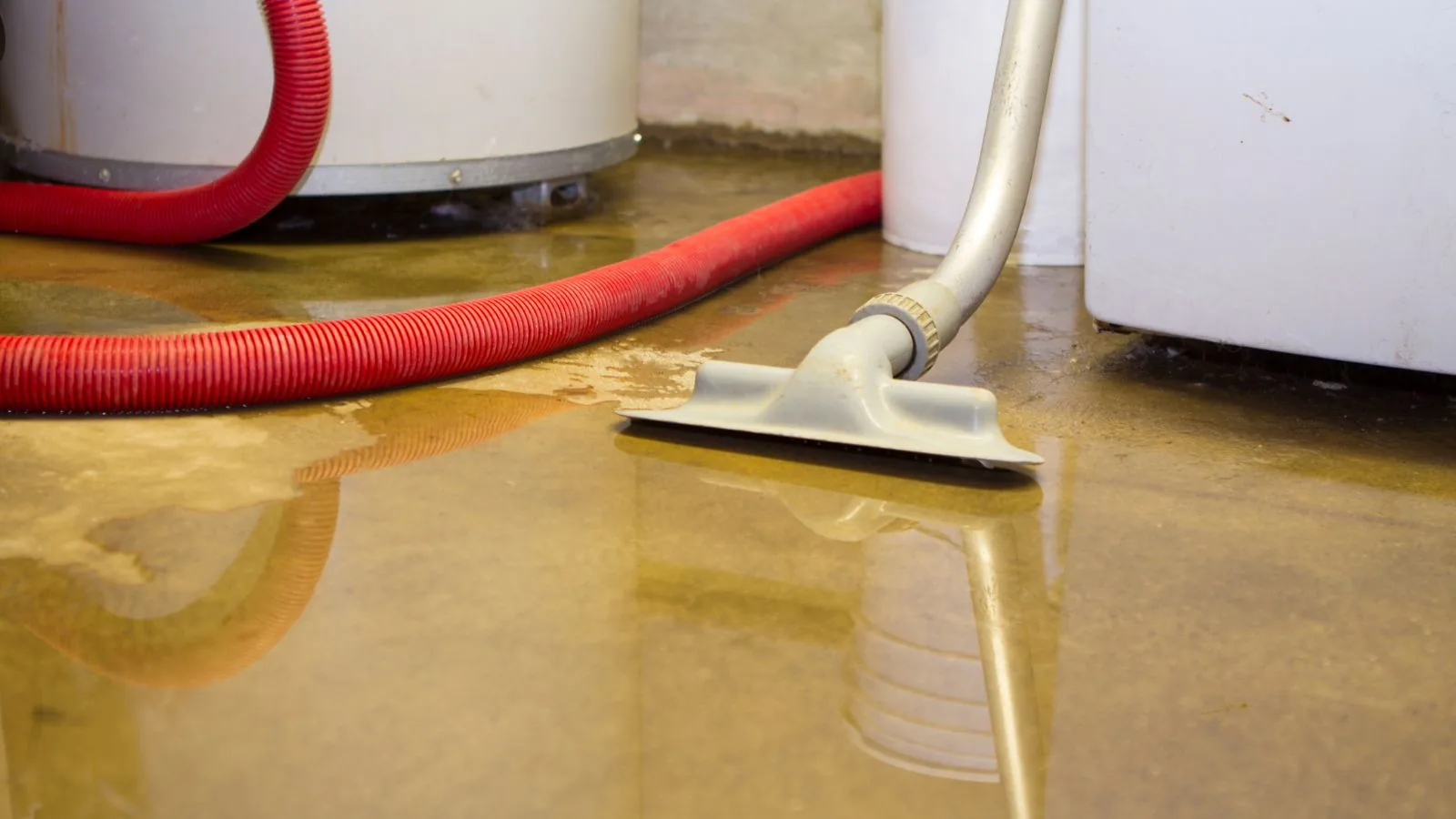
Raw sewage in a building is an emergency and a health hazard. Keep children, pets and everyone else out of the affected area, stop using sinks, toilets, showers and the washer, and call the 24/7 line. Do not try to clean it up with household tools.
This page covers Category 3 water from a sewer or drain backup. The work is done with protective gear, containment and materials disposal that a normal water job does not need.
Sewage backup: what to do first
- Stop using water. Every flush or drain sends more into the backup.
- Keep people and pets out of the affected area. Close the door if you can do so safely.
- Do not touch the water with bare hands. Wash with soap and water if you do.
- Turn off power to the area only if you can reach the panel from a dry spot. If water touches outlets or the panel, call the electric utility or 911 before you call us.
- Call the 24/7 line, then call a plumber or the city if the blockage may be in the sewer main.
Safety before cleanup
Sewage can carry bacteria and other pathogens. Do not use a household vacuum, do not wade through it barefoot and do not let children or pets near the area. Questions about your own health after exposure belong to a physician.
When a sewage backup is an emergency
It is urgent whenever sewage is on the floor. Water that rises through a floor drain, a toilet or a basement shower after heavy rain is often a sign that the sewer line or the city main is overwhelmed. Same-day response is offered when crews are available, including nights and weekends.
If your neighbors have the same problem, the issue may be in the street. Call the city sewer department or the village that serves you, in addition to the restoration line.
How crews clean up sewage
Crews wear protective suits, gloves and respirators and set up containment so the contamination does not spread. Liquids and solids are removed with extraction equipment, and the affected area is cleaned and treated with antimicrobial products.
Because sewage is Category 3 water, porous materials that were soaked are removed and discarded. That includes carpet and pad, soaked drywall and insulation, and upholstered furniture. Hard surfaces and framing are cleaned and sanitized. Air movers and dehumidifiers then dry what remains, and moisture readings confirm the area is ready for repair.
The water extraction page explains how the water is pulled out, and the structural drying page explains the drying step.
| Material | What happens after sewage contact | Why |
|---|---|---|
| Carpet, pad, upholstery | Removed | Porous materials cannot be fully sanitized |
| Drywall and insulation | Removed above the water line | Contamination wicks into porous material |
| Concrete, tile, sealed floors | Cleaned and sanitized | Hard surfaces can be cleaned |
| Framing | Cleaned, treated and dried | Wood can often be saved |
Final decisions are made on site.
Where sewage backups start in Athens County
Many backups begin in aging sewer lines. In Chauncey, USDA Rural Development reported in 2024 that the village's clay sewer pipes date to the 1950s and are near the end of their useful life, and that stormwater entering the system overwhelmed the sewer facility. The village is replacing its sewer lines with federal support.
Heavy rain can cause backups wherever stormwater gets into a sewer. If your home has a basement bathroom or a floor drain, it is the lowest fixture on the line and the first place a backup appears. Ask your sewer utility about backflow protection, and ask your insurer whether your policy covers sewer backup, since many standard policies do not unless you add an endorsement.
Sewage in the house? Stay out of it and call the 24/7 line.
☎ Call (740) 231-9132Insurance and sewer backup coverage
Check your policy for sewer backup coverage, since it is often an optional endorsement rather than part of the base policy. Read the language and call your agent. Keep photos, receipts and a list of discarded items.
Nobody outside your insurer can promise that a claim will be paid.
What affects the cost of sewage cleanup
Protective measures make sewage jobs more involved than clean-water leaks.
| Factor | Why it changes the scope |
|---|---|
| Volume and spread | A single drain is not a flooded basement. |
| Materials removed | Carpet, pad, drywall and insulation add disposal. |
| Containment and protective gear | Required for Category 3 work. |
| Drying days and equipment | Cleaned areas still need drying. |
| Rebuild scope | Drywall, flooring and trim are priced afterward. |
The crew walks you through scope and price first. Call (740) 231-9132 to set that up.
Frequently asked questions
Do you handle sewage backup emergencies at night or on weekends in Athens?
Yes. Backups happen at all hours, and so do answers. Stay out of the area and stop using water, and a crew is sent the same day when one is available.
Is it safe to clean sewage myself?
Not recommended. Sewage carries pathogens, and household cleaning does not remove contamination from porous materials. Questions about health belong to a physician.
What if my neighbors also have backups?
The blockage may be in the city or village main. Call the sewer utility that serves your address and your plumber in addition to the restoration line.
Will my homeowners insurance cover a sewage backup?
Often only with a sewer backup endorsement. Check your policy and ask your agent.
Can I save my carpet after a backup?
Usually not. Carpet and pad that touched sewage are removed. Hard flooring can often be cleaned.