

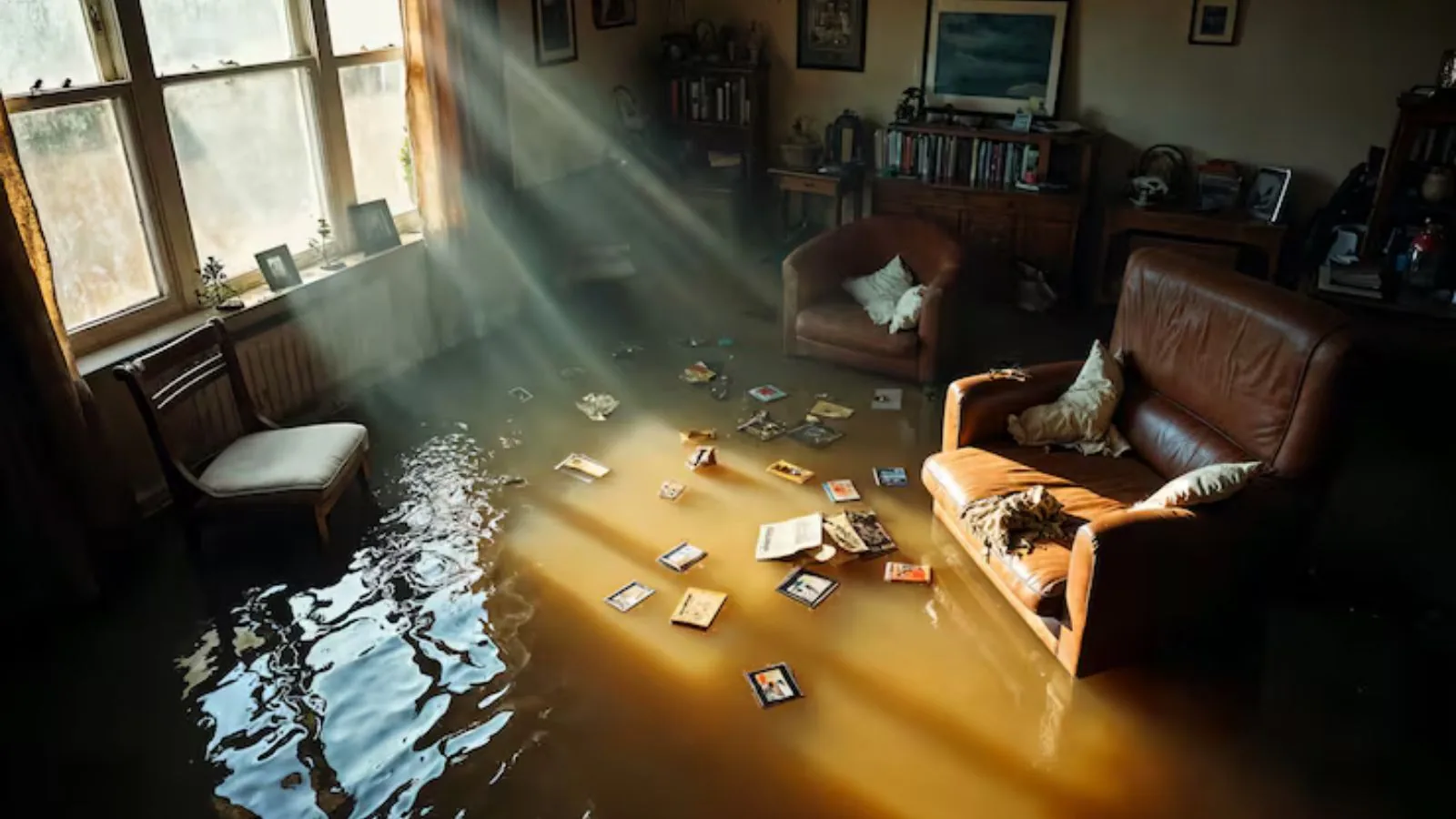
Floodwater is not clean water, and flood cleanup is not the same as fixing a leak. Rising water carries soil, runoff and sometimes sewage into a building, so it is treated as contaminated. This line is open 24/7, and while you wait you should stay out of the water, keep children and pets away and turn off the main breaker only if you can do so from a dry spot.
This page covers flooding from rivers, creeks, groundwater and surface runoff. A storm that pushes rain through a roof or window is covered on the storm damage page, and a failed sump pump or seepage in a basement is covered on the basement page.
When flooding is an emergency
Flooding is an emergency whenever water is inside the living space, still rising or flowing in. The priority is safety. Never walk through moving water, never drive through flooded roads, and never touch electrical equipment while standing in water.
Once the water stops rising and local officials say it is safe to return, call. Same-day response is offered when crews are available, and the dispatcher can tell you what to do before crews arrive. If there is a gas smell, leave and call the gas utility or 911 first.
Safety before cleanup
Do not enter a flooded building until power is confirmed off and the structure is safe. Floodwater can hide holes, broken glass and live current. Wear boots, gloves and eye protection if you must enter, and never use a household vacuum or electronics in floodwater.
How flood cleanup works
Crews wear protective gear and begin by pumping out floodwater and removing mud and debris. Because the water is Category 3, porous materials that were soaked are usually removed. That includes carpet and pad, insulation, soaked drywall and upholstered furniture.
Hard surfaces and framing are cleaned and treated with antimicrobial products, then dried with air movers and dehumidifiers. Moisture readings confirm when each area is dry. Repair, including drywall and flooring, begins only after drying is confirmed. Expect more material to be removed than after a plumbing leak, and expect the job to take longer.
| Material | Usual outcome after floodwater | Why |
|---|---|---|
| Carpet and pad | Removed | Pad holds contaminated water and cannot be cleaned in place |
| Drywall and insulation | Removed to above the water line | Porous and hard to sanitize |
| Solid wood framing | Cleaned and dried | Can usually be saved if dried promptly |
| Concrete and tile | Cleaned and sanitized | Hard, non-porous surfaces |
The final scope is set on site from readings, not from a chart.
Why flooding is a real issue in the Athens valley
Athens grew along the Hocking River, and large parts of the city and Ohio University sit in its floodplain. According to Ohio University, the river overflowed so regularly before 1970 that flooding on campus was an annual event, with major floods remembered in 1964 and 1968. The U.S. Army Corps of Engineers rerouted the channel in 1969 and 1970 to reduce that risk.
Flooding did not disappear from the area. Outside the city, county officials told Inside Climate News in 2025 that federal maps leave out many small tributaries and that some residents do not know their homes can flood. Chauncey, for example, sits between the Hocking River and Sunday Creek, and heavy rain has covered streets there.
The practical step is to look up your address on the FEMA flood map and ask the City of Athens or your county about floodplain rules. Do that before you rebuild, because mapped areas can carry permit requirements.
Flood insurance and what your homeowners policy says
The Ohio Department of Insurance notes that flood insurance is typically not included in most homeowners, renters and business policies, and that a 30-day waiting period usually applies before a new flood policy begins. Water from a plumbing failure and water from a river are treated very differently by insurers.
Read your policy and ask your insurer what applies to your loss. Keep photos, moisture logs and receipts, since a flood claim may involve a federal program or a private policy. Nobody outside your insurer can promise a claim will be approved.
Floodwater inside the building? Call the 24/7 line once it is safe to talk.
☎ Call (740) 231-9132The city plan says much of the Near East Side is in the 100-year floodplain, which is a reason to know your flood coverage.
What affects the cost of flood cleanup
Flood jobs are larger than leaks because contaminated water changes the whole scope.
| Factor | Why it changes the scope |
|---|---|
| Depth and duration | Longer exposure means more material removed. |
| Water category | Floodwater is treated as contaminated, which adds protective gear and disposal. |
| Area affected | Whole floors need more equipment than single rooms. |
| Contents | Furniture, appliances and stored items may be cleaned or discarded. |
| Rebuild scope | Drywall, flooring and trim after drying are separate. |
A crew explains the work and the price first. For a number that fits your house, call (740) 231-9132.
Frequently asked questions
Do you handle flood emergencies at night or on weekends in Athens?
Yes. Flood calls are taken at night and on weekends too. For active flooding with rising water, safety comes first, and the dispatcher will tell you what to do before you enter the building.
Is floodwater always treated as contaminated?
Yes. Floodwater carries soil, runoff and sometimes sewage, so it is treated as Category 3. That is why carpet, pad and soaked drywall are removed instead of dried.
Can I keep my furniture after a flood?
Hard furniture can often be cleaned. Upholstered pieces and mattresses that soaked in floodwater are usually discarded. Ask the crew before deciding.
How do I find out whether my house is in a flood zone?
Use the FEMA Flood Map Service Center with your address and ask the City of Athens or your county about floodplain rules. Federal maps do not show every small stream.
Does homeowners insurance cover a flood?
Usually not. Flood is typically excluded from standard homeowners, renters and business policies and needs separate coverage. Ask your agent what your policy says.