

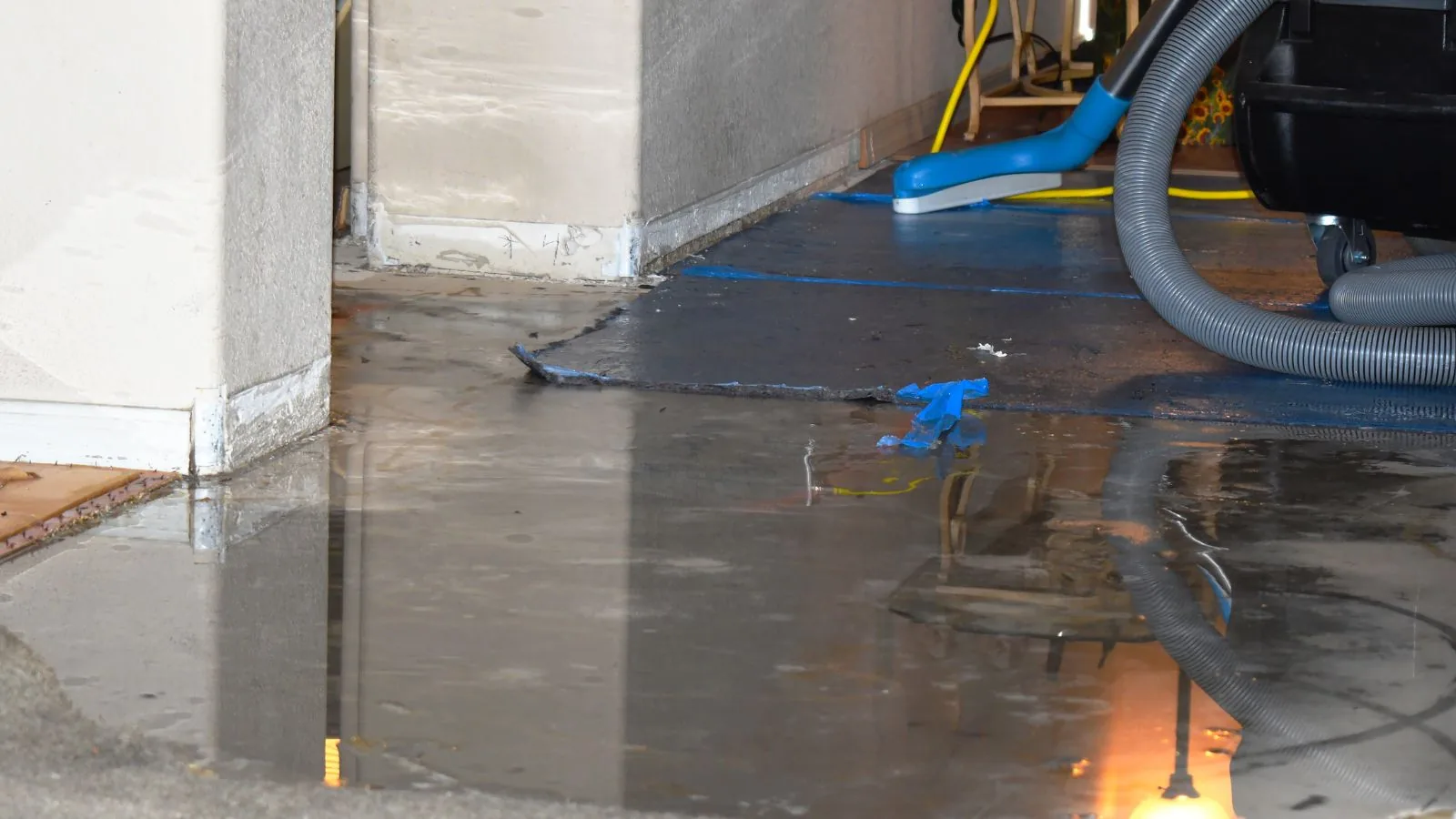
Standing water on a floor is an emergency, and this line is open 24/7 for it. Every hour the water sits, it wicks further into drywall, soaks carpet pad and finds its way under flooring. While you wait for the crew, stop the source if you can reach it safely, keep everyone out of the water and take photos before you move anything.
This page covers one job: getting standing water out of a building right now with pumps, extraction units and wet vacuums. Drying the structure afterward is a separate step explained on the structural drying page.
When standing water is an emergency
Not every wet floor needs a crew, but several situations do. Water deeper than a puddle, water that has been present for more than a few hours, and water that soaked carpet or reached a wall all qualify. So does any water in a room with outlets, appliances or a panel nearby.
Same-day response is offered when crews are available, including nights and weekends. If you are unsure, call and describe the room. The dispatcher can tell you whether a mop and a fan will do or whether extraction is needed.
Electrical safety comes before water removal
If water is touching outlets, a power strip or the electrical panel, do not walk into it. Cut power only if you can reach the panel while standing on a dry surface. Otherwise leave the area and call the electric utility or 911 before you call us. Never run a household vacuum on standing water.
How crews remove standing water
The method depends on depth and surface. Deep water goes first, usually with a submersible pump and hose that discharges outside or to a drain. Once the depth is down to an inch or less, crews switch to extraction units that pull water from the surface and from carpet.
Wet vacuums and squeegees handle corners and thresholds that bigger equipment cannot reach. Carpet and pad get a weighted extractor pass, and crews decide by touching and metering the pad whether it can stay or must go.
Moisture meters and a thermal imaging camera then show where water moved that you cannot see. A wall that looks dry from the room can be saturated behind the baseboard, and that reading decides what happens next.
| Situation | Typical first step | What it means for the job |
|---|---|---|
| More than an inch of standing water | Submersible pump, then extraction unit | Fast removal limits how far water climbs into walls. |
| Soaked carpet and pad | Weighted extraction, then a decision on the pad | Pad is often removed. Carpet may be saved if the water was clean. |
| Water under hardwood or laminate | Surface extraction and floor drying mats | Speed matters. Boards cup as they absorb water. |
| Water that came from a drain or the ground | Extraction with protective gear and containment | Contaminated water changes what can be kept. |
Real decisions are made from moisture readings on site, not from a chart.
Why the water category changes the method
Restoration crews sort water into three categories. Category 1 is clean water, such as a supply line. Category 2 carries some contamination, such as washing machine overflow. Category 3 is grossly contaminated, such as sewage or river water. The category sets how much porous material is removed and what protective equipment crews wear.
Water also gets worse over time. Clean water that sits in carpet for a few days can be treated as contaminated. This is why quick removal helps the outcome as well as the speed of the job. The sewage backup page explains Category 3 work in detail.
Extraction first, drying second
Pulling the water out removes most of the volume but not the moisture held in wood, drywall and subfloor. Drying equipment handles that part over several days. Skipping drying leaves materials damp enough to swell, warp or smell.
Crews usually set drying equipment before they leave the first visit, so the process continues overnight. The extraction visit and the drying plan are explained together before work starts.
Why basements and low rooms fill in the Athens valley
Athens sits in the Hocking River valley with hills on several sides. Rain that does not soak in runs downhill toward low ground, and a basement or ground-floor room below the grade of a nearby street is where it collects. A sump pump that fails during a storm turns a damp basement into one with standing water in hours.
If your problem is groundwater or river flooding, read the flood damage page. If it is a finished basement with a failed sump, the basement water page covers contents and finished walls.
Standing water now? Call the 24/7 line and describe depth and source.
☎ Call (740) 231-9132Extraction is the first stage of the ANSI/IICRC S500 process, and removing standing water early lowers the amount of drying equipment later. The standard is a public industry reference.
What affects the cost of water extraction
Extraction is usually the fastest part of a job and the first one priced.
| Factor | Why it changes the scope |
|---|---|
| Depth and volume | Deeper water takes more pumping time and larger equipment. |
| Water category | Contaminated water adds protective gear and disposal steps. |
| Surfaces affected | Carpet, hardwood and concrete each need a different method. |
| Access and time of day | Basements with narrow stairs or nighttime calls change setup time. |
| What comes after | Extraction is often followed by drying and repair, which are scoped separately. |
The price for this job is explained before work starts. Call (740) 231-9132 with the details and ask what your case would involve.
If a burst pipe or a failed appliance caused the water, your policy may respond to the damage. Sudden and accidental losses are often covered while gradual leaks and flooding often are not. Ask your insurer before deciding what to claim.
Frequently asked questions
Do you handle water extraction emergencies at night or on weekends in Athens?
Yes. The emergency line is answered 24 hours a day, including nights, weekends and holidays. Same-day response is offered when crews are available, and the dispatcher gives you a real answer on the call instead of a guaranteed arrival time.
Should I try to remove the water myself first?
Small clean spills can be mopped or vacuumed with a wet vacuum, if no electrical hazard is present. Anything deeper than a puddle, or any water that soaked carpet or reached walls, is better left to equipment that pulls moisture from materials as well as from the surface.
Can wet carpet be saved after extraction?
Sometimes. Carpet that was soaked with clean water and extracted quickly can often be dried in place, while the pad underneath is usually replaced. If the water was contaminated, carpet is more likely to be removed. The carpet water damage page explains how crews decide.
How long does water extraction take?
Pumping and extracting a typical room often takes a few hours, but the time depends on depth, access and how many areas are wet. Drying the structure takes days afterward and is planned separately.
Will my insurance cover water extraction?
It depends on the cause. A sudden and accidental source such as a burst pipe is often covered. River or groundwater flooding is usually excluded and needs a separate flood policy. Check your policy or ask your insurer, and keep your photos and records.