

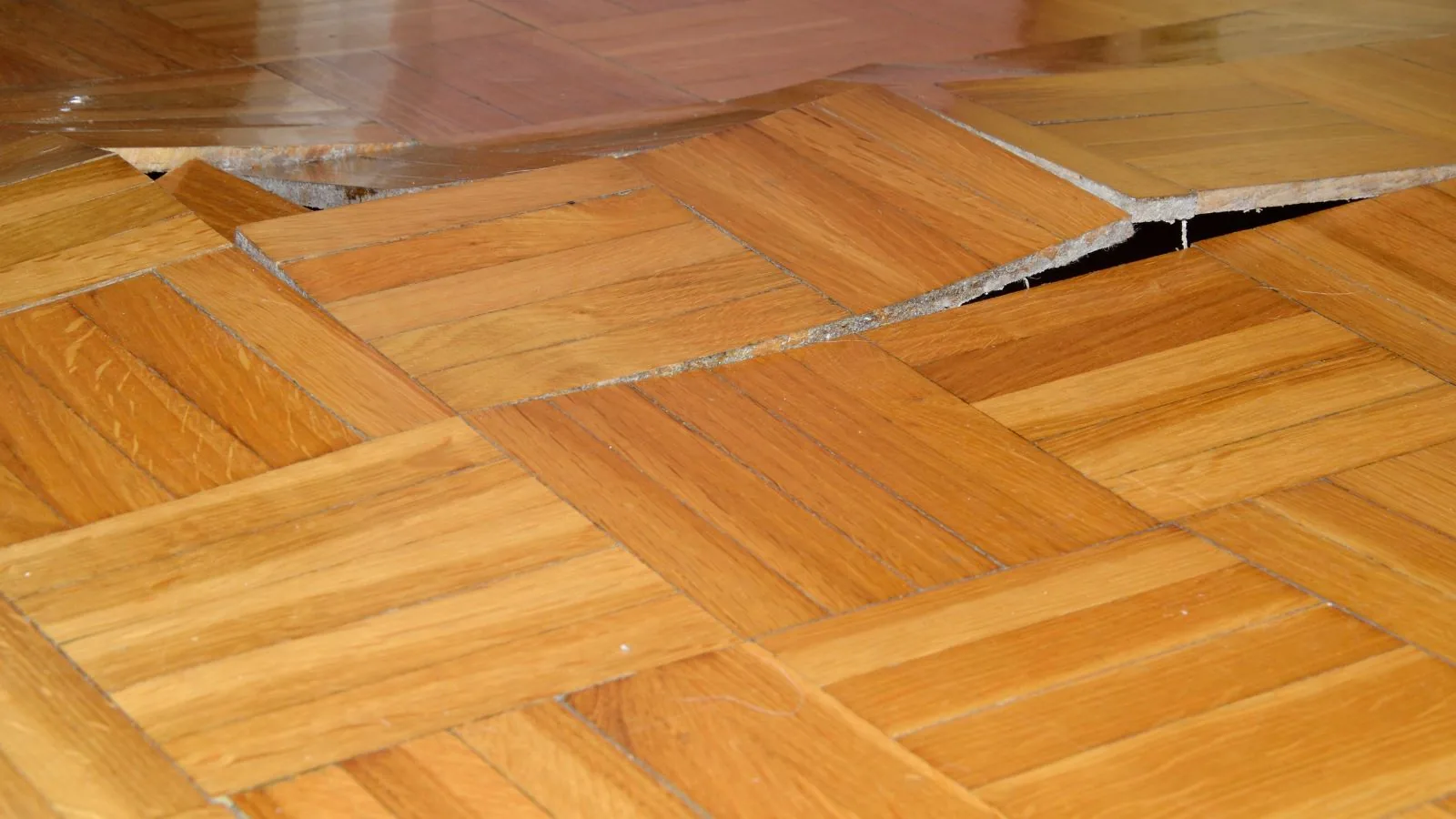
Wood takes on water, swells and changes shape. A leak, a flood or a wet subfloor can make a hardwood floor cup, crown or buckle within days. This page covers drying and repairing solid hardwood, engineered wood and laminate floors that got wet.
The first rule is speed. The sooner water is removed and the floor is dried, the better the chance of saving it. Standing water on the floor is covered on the water extraction page.
What water does to a wood floor
Cupping
Edges of boards rise higher than the center. It happens when moisture is under the floor, in the subfloor or the crawl space.
Crowning
The center of boards rises above the edges. It often shows up after a cupped floor is sanded too early.
Buckling
Boards lift off the subfloor, sometimes in a ridge. This is a severe response to a large amount of water.
Staining
Dark marks at seams and edges from water, or gray marks from long exposure.
Solid, engineered or laminate: they react differently
| Floor type | How it responds to water | Can it be saved? |
|---|---|---|
| Solid hardwood | Swells and cups, can recover if dried slowly | Often, if caught within days |
| Engineered wood | Layers can separate and edges can swell | Sometimes, depending on thickness and how wet |
| Laminate | Core swells and edges lift | Rarely, once the core swells |
Readings and a test of the floor decide.
How crews dry a hardwood floor
After the water is extracted, crews place drying mats, which pull moisture out of the boards through suction, along with air movers and dehumidifiers. In some cases, small holes are drilled in cabinet bases or along the baseboard to dry the cavity beneath.
A moisture meter tracks the board and subfloor readings. Drying too fast can crack boards, so crews adjust the equipment as the floor dries. A floor that cups often flattens as it dries, which is why sanding is delayed until readings are normal.
If moisture comes from below, the source has to be fixed first. A wet crawl space under a hardwood floor will keep cupping it. The crawl space water page explains that kind of dry-out.
When a hardwood floor must be replaced
Some floors cannot be saved. Boards that have buckled off the subfloor, floors soaked with contaminated water and laminate with a swollen core are usually replaced. Replacement can be a section or the whole floor, depending on whether new boards can be blended with the old.
If the floor can be saved, the last step is sanding and refinishing. A refinisher can often match stain on an older floor, but the match depends on the species and the finish.
Hardwood wet or starting to cup? Call and describe the boards and the source.
☎ Call (740) 231-9132ANSI/IICRC S500 recognizes that wood floors absorb and release water slowly, so drying is measured with moisture readings instead of by feel. Wood flooring manufacturers also publish their own moisture limits for installation.
Safety on wet floors
Keep these in mind while you wait for help.
- Wet floors are slippery. Keep walkways clear.
- Do not sand a cupped floor until it is dry.
- Keep electrical cords off wet floors.
Old floors in Athens houses
Older houses near downtown and along East State Street often have original solid hardwood or pine, sometimes under carpet. Old boards can be thick and dry well, but they may have gaps and finish that is already worn. A leak that wets old boards from above is easier to fix than one from below.
If your floor sits over a crawl space or a basement, check below as well. Moisture from underneath is common in older homes, and the water can come from a pipe, a drain or seepage. A moisture reading on the floor and on the subfloor gives a clear answer.
What affects the cost of hardwood repair
Drying costs less than replacing a floor, so speed matters.
| Factor | Why it changes the scope |
|---|---|
| Floor type | Solid, engineered and laminate respond differently. |
| How long it was wet | Water that sits for days causes cupping and staining. |
| Area affected | A single room versus a run of connected rooms. |
| Drying days and equipment | Mats and dehumidifiers run for days. |
| Refinishing or replacement | Sanding, staining and finishing are separate. |
Scope and cost are discussed before any work begins. Call (740) 231-9132 and give the address.
Insurance may cover a sudden loss and often excludes slow leaks. Ask your insurer before filing.
Frequently asked questions
Will my hardwood floor go back to normal after it cups?
Often, if it is dried slowly and the moisture source is fixed. Some cupping remains and is corrected by sanding after the floor is dry.
How soon should I call after a floor gets wet?
As soon as you can. Boards start to absorb water right away, and the first days matter most.
Can laminate flooring be dried?
Sometimes if it was wet briefly. Once the core swells, it usually has to be replaced.
Why is the floor still cupped after the leak was fixed?
The wood is still holding moisture. Cupping often eases as the boards dry. Do not sand until readings are normal.
Do I need to remove the finish to dry the floor?
Usually not. Drying mats work through the finish, but a damaged finish may need to be refinished afterward.