

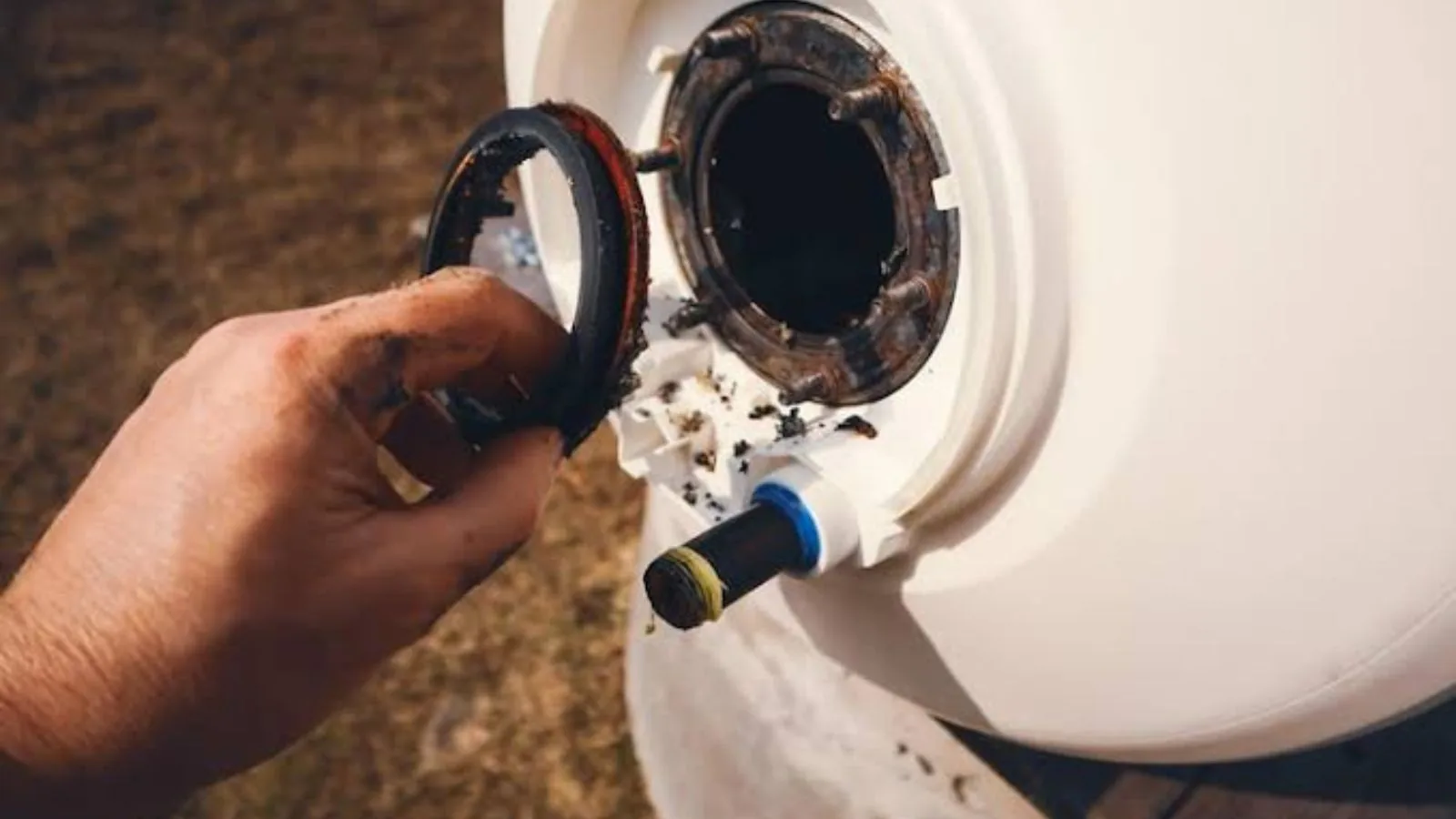
A leaking water heater is an emergency because a full tank holds a large volume of water, and the leak does not stop until the supply is shut off. Turn off the cold water supply valve on top of the heater, shut off the power at the breaker, or the gas at the gas valve, and call the 24/7 line. Keep everyone out of any water near the unit.
This page is about the water a failed tank or connection puts on the floor. Replacing the heater is a plumber's job, and this page covers cleanup, drying and repair of what got wet.
When a water heater leak is an emergency
A drip from a fitting can wait for a plumber, but a tank that is pouring water or has dropped to the bottom of the rack cannot. Treat any pooling water around the base as urgent, and do not stand in it near a gas or electric unit.
Heaters in basements and utility rooms often sit near floor drains, but many sit on carpet or inside a closet. Water in a closet runs into walls and under flooring, so same-day response matters. The line is open nights and weekends, and same-day response is offered when crews are available.
Gas and electric safety
If you smell gas, leave the building and call the gas utility or 911 before anything else. For electric heaters, turn off the breaker only if you can reach it without standing in water. Do not relight a pilot in a wet space.
Why tanks fail and why Athens water matters
Tanks fail at the end of their service life, when the lining corrodes and the steel shell opens at a seam or the bottom. Minerals in the water speed that up. The City of Athens has described its supply as naturally hard water, and hard water leaves scale and sediment in the bottom of a tank, which insulates the burner from the water and shortens the tank's life.
That is why draining a few gallons off the bottom once a year, as the manufacturer's instructions explain, is worth the ten minutes. It does not stop an old tank from failing, but it removes sediment that makes it fail sooner. If you are not sure how old your heater is, the date is usually on the label.
Not every leak is the tank. A cracked fitting, a loose connection or a drain valve can drip and run down the side of the tank, and the pressure relief valve discharges when it works as designed. A plumber can tell the difference.
How cleanup and drying work after a water heater leak
Water from the tank is clean when it first leaves the tank, but it gets worse as it sits. Crews extract standing water, then check the floor, baseboards and the lower few inches of surrounding walls with a moisture meter. In a finished basement, the wet material is usually the carpet and pad and the bottom of the drywall.
Air movers and a dehumidifier dry what is left. Heater rooms that are small and hot dry quickly, but closets with shut doors keep moisture in. Crews often remove baseboards to let walls dry from the bottom.
Once readings drop to the goal for each material, repair begins. That usually means replacing sections of baseboard, drywall and flooring. The water extraction page explains the first step in more detail.
| Where the heater sits | What gets wet first | Typical response |
|---|---|---|
| Concrete basement floor | Stored boxes, carpet and the base of walls | Extract, move items, dry wall bases |
| Finished basement room | Carpet, pad and drywall | Remove pad, dry carpet if possible |
| Closet or utility room upstairs | Flooring, subfloor and the room below | Check ceilings below for water |
| Attic or crawl space | Insulation and framing | Remove wet insulation, dry joists |
Moisture readings decide how much is dried and how much is removed.
Tank leaking and the floor is wet? Call the 24/7 line from a dry spot.
☎ Call (740) 231-9132Water heater makers and the U.S. Department of Energy publish maintenance guidance, including the advice to flush tanks and replace aging units. Cleanup after a failure follows ANSI/IICRC S500.
When the leak is not the heater
Many calls that begin as a water heater leak turn out to be a floor drain, a washing machine hose or a pipe in the ceiling above. Check the top of the heater, the connections and the area above it before you decide. If the water is coming from a pipe that burst, the burst pipe page explains what to do.
If the leak comes from an appliance such as a washer in the same room, see the appliance leak page.
What affects the cost of cleaning up a heater leak
The heater replacement is a plumbing bill, and restoration is separate.
| Factor | Why it changes the scope |
|---|---|
| Amount of water released | A slow weep soaks far less than a split tank. |
| Flooring and walls reached | Carpet and pad change the scope compared with concrete. |
| Time before drying began | Water that sits for days spreads into more material. |
| Drying days and equipment | Closed rooms and thick materials take longer. |
| Rebuild scope | Baseboards, drywall and flooring are priced after drying. |
Expect a plain explanation of scope and price before anything is removed. Call (740) 231-9132 to start the conversation.
A sudden tank failure is often covered, while a slow leak that went on for months often is not. Ask your insurer and keep the old heater if the adjuster asks to see it.
Frequently asked questions
Do you handle water heater leak emergencies at night or on weekends in Athens?
Yes. Call any time of day or night, and the dispatcher can tell you what to shut off while you wait. Same-day response is offered when crews are available.
What should I shut off first?
Close the cold water supply valve at the heater, then switch off power at the breaker or turn the gas valve to off. If you smell gas, leave and call the gas utility.
Does the cleanup include replacing the heater?
No. A plumber replaces the heater. Cleanup covers extraction, drying and repair of the wet area.
Is the water from a water heater leak safe to touch?
Water from a tank starts clean but can be hot, so be careful. Treat water that has sat for days as contaminated and use gloves.
Can wet drywall behind the heater be saved?
Often, if it was wet briefly and is dried quickly. Moisture readings decide. See the wall and drywall page for what crews look at.