

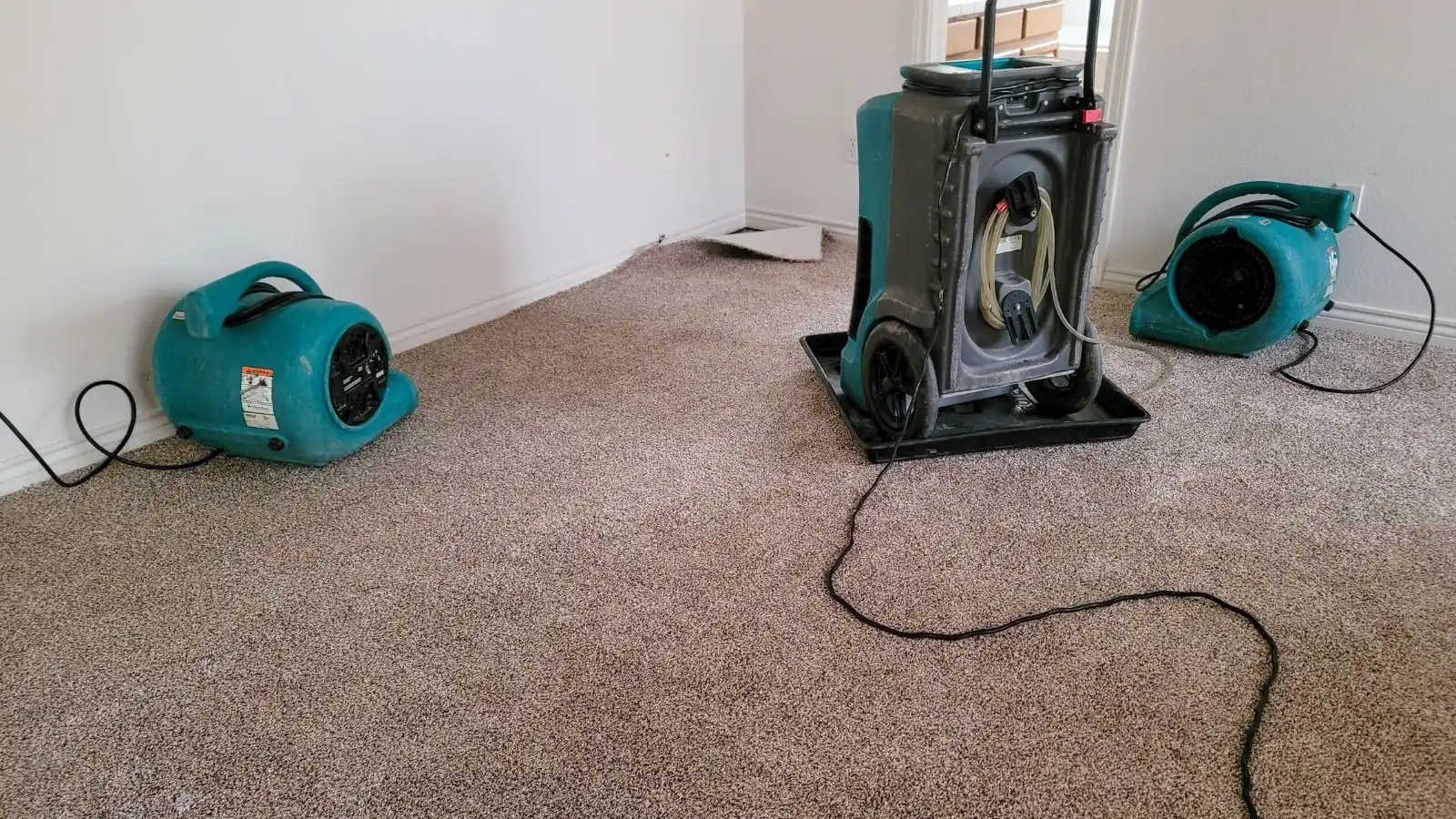
Customers ask the same question in the first call: how long will this take? The honest answer is a range, because drying depends on several things that change from house to house. A small, clean-water spill on a hard floor may dry in a day. A flooded finished basement can take a week or more.
This guide explains what controls drying time, what a typical schedule looks like and why finishing too early is a bad idea.
What controls how fast a building dries
The amount of water
More water means more to remove, and extraction at the start saves days.
The materials
Dense materials like hardwood, plaster and concrete hold water and release it slowly. Drywall and carpet dry faster.
Temperature and humidity
Warm, dry air dries faster. Cold, humid air slows it. Crews heat the space and dehumidify.
Airflow
Air movers push dry air across surfaces. Without airflow, moisture just sits.
How long it was wet
Water that sat for days soaks deeper and is harder to dry.
Hidden areas
Wet wall cavities and subfloors dry slowly unless opened up.
A typical drying timeline
| Day | What usually happens |
|---|---|
| Day 0 | Stop the source, extract standing water, remove materials that cannot be saved, set equipment |
| Days 1 to 2 | Equipment runs, first moisture readings show what is drying slowly |
| Days 3 to 4 | Equipment is adjusted, wall cavities and floors keep drying |
| Day 5 or later | Readings reach the dry goal, equipment is removed, repairs can begin |
Actual schedules vary. Daily readings tell the story.
Classes of water loss describe how much moisture is in the materials and how hard it will be to dry. Class 1 involves a small area and low-absorption materials. Class 4 involves deep-bound water in dense materials such as hardwood or plaster, and it takes specialty equipment and more time.
Want a drying plan for your house? Call and describe the damage.
☎ Call (740) 231-9132Safety while equipment runs
Keep these in mind while you wait for help.
- Keep cords and machines away from children and pets.
- Do not cover or move air movers.
- Call if a breaker trips.
Why "it feels dry" is not good enough
Surfaces dry before the layers behind them. A floor can feel dry to the hand while the subfloor holds moisture. A wall can look fine while the bottom plate is still damp. If repairs start too early, new drywall and flooring trap moisture and the smell and swelling come back.
Crews use pin and pinless moisture meters, thermal cameras and humidity gauges. They compare readings with dry reference spots in the same house. When wet areas match the reference, drying is done.
Drying after a big rain
When Federal Creek flooded Amesville on June 28, 1998, more than 10 inches of rain fell and most businesses and houses on the south side were damaged. A flood that deep soaks wall cavities, crawl spaces and floors for much longer than a pipe leak does.
In low houses near Amesville or Nelsonville, the ground itself may stay wet for days after the river drops, which can slow drying in basements and crawl spaces. Expect a longer schedule when the ground is saturated.
Source type: Public reference (Wikipedia)
What you can do to help
- Leave the equipment running. Turning it off to save noise or power slows the job.
- Keep doors and windows closed so the dehumidifier can work.
- Do not move air movers or unplug equipment.
- Keep a log of the equipment hours for your records.
- Ask for the daily readings.
Equipment is loud and uses electricity. That is the price of a dry house. Ask the crew how much power it will use and discuss it with your insurer.
Small jobs and big jobs
A clean-water spill on a tile floor may need extraction and a day of airflow. A flooded finished basement with carpet, drywall and a concrete slab can need removal of materials, a week of drying and more than one round of readings. Ask the crew which kind of job yours is and what the first readings show.
When drying takes longer than expected
A job may run long if new wet areas are found, if the weather is humid, if hardwood is slow to release water or if the source was not fixed. The crew should explain any change and show readings that support it. If equipment sits without readings, ask why.
The structural drying page has more on the equipment, and the hardwood floor page explains why wood takes time.
Frequently asked questions
How many days do air movers and dehumidifiers run?
Often three to five days, but it depends on the water, materials and humidity. Daily readings decide when to stop.
Can I speed up drying with fans from the hardware store?
Household fans help a little, but they do not remove moisture from the air. Professional dehumidifiers and air movers work together.
Why is my floor still wet after a few days?
The subfloor or the layers underneath may hold moisture. A moisture reading shows where.
When can rebuild work start?
When readings show the materials have reached the dry goal. Starting earlier risks trapping moisture.
Will drying equipment raise my electric bill?
Yes. Ask the crew for an estimate of the load and talk to your insurer about whether it is part of the claim.