

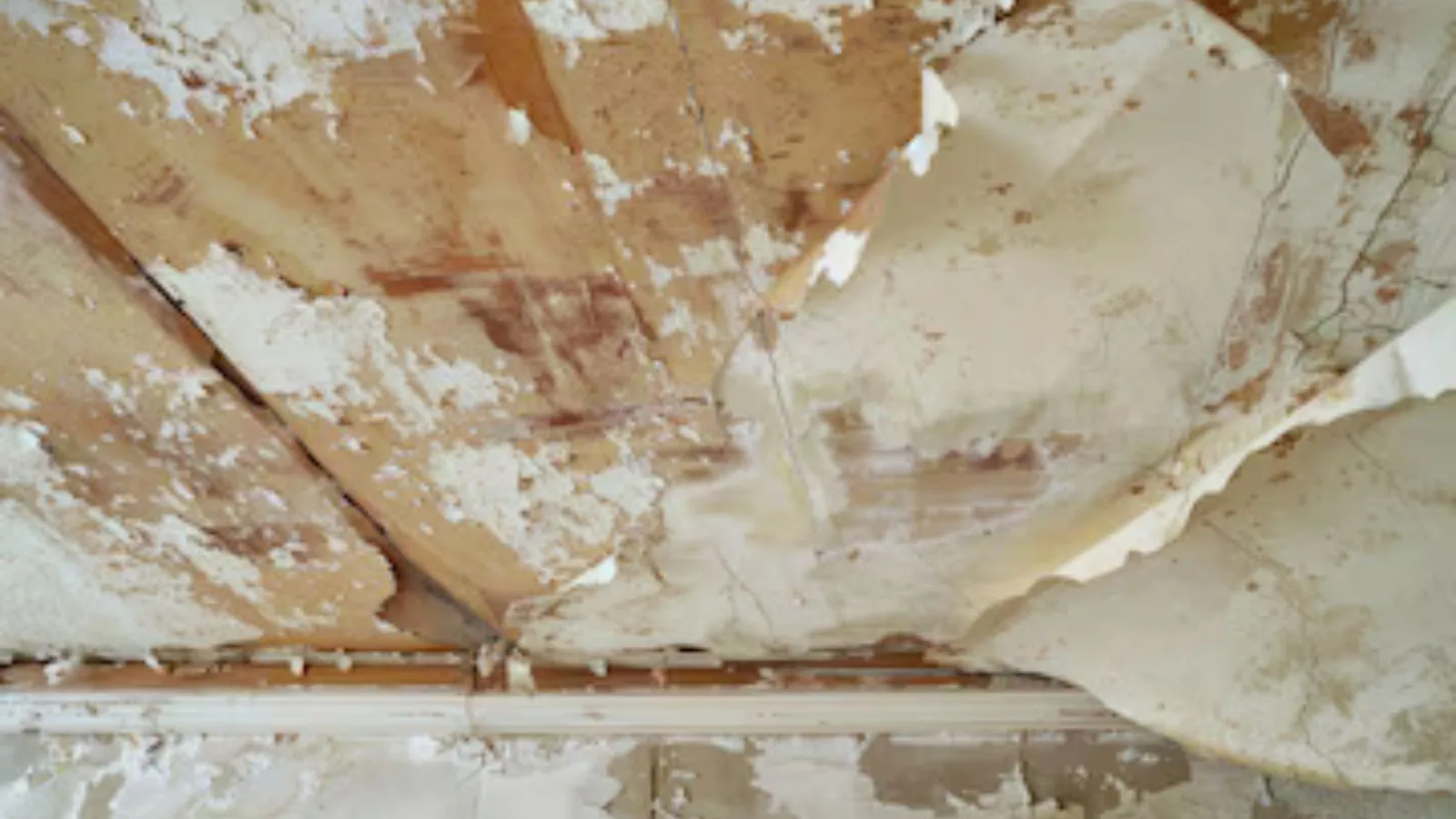
A brown stain on a ceiling can mean a leak that ended years ago, or one that is dripping right now. The difference matters. An active leak needs a repair and a dry-out. An old stain may only need paint. Insurance, landlords and buyers all ask the same thing: how long has this been here?
No visual check is perfect, but a handful of clues point in the right direction. This guide explains them and the tools that settle the question.
Signs that damage is recent
- The stain is damp or cool to the touch.
- Paint is bubbling, sagging or peeling, and the drywall feels soft.
- The color is light tan or yellow with a darker wet edge.
- Water is dripping or the area is darker after rain or after running a fixture.
- There is a fresh musty smell.
Signs that damage is older
- The stain is dry, hard and has a crisp ring edge.
- There are multiple rings, which means repeated wetting.
- Color is dark brown or gray, with a rough texture.
- Wood nearby is dark, cracked or crumbly.
- Past patches or paint cover the area.
Rings on a stain build up over time. Each time the area gets wet and dries, the stain edge is a bit further out. Many rings suggest a leak that comes and goes, such as a roof leak that appears with rain.
| Clue | Suggests new | Suggests old |
|---|---|---|
| Feel | Damp or cool | Dry and hard |
| Color | Light tan, wet edge | Dark brown, multiple rings |
| Paint | Fresh bubbles or sag | Peeled, repainted or patched |
| Smell | Fresh musty odor | Faint or none |
| Moisture reading | High reading | Normal reading |
A moisture reading is the only clue that is not a guess.
The tools that settle it
A moisture meter measures the water content of drywall, wood and other materials. A thermal camera shows cooler spots where moisture evaporates. A crew compares readings with dry reference spots. A high reading means the area is wet now. A normal reading on a stained area suggests the leak has stopped.
A stain with normal readings can still be a problem. The material may be weakened or have staining that returns. The wall and drywall page explains how that is handled.
Not sure if a stain is active? Call for a moisture check.
☎ Call (740) 231-9132Moisture readings compared with a dry reference, as described in the ANSI/IICRC S500 standard, are how professionals separate active moisture from old staining.
Why it matters for insurance
Many policies cover sudden damage and exclude damage from long-term seepage. If a stain looks old, an adjuster may ask when it started. Photos from before the loss, plumbing invoices and inspection reports can help show the timeline.
Do not guess or exaggerate. Tell your insurer what you know and what you do not.
Why it matters for renters and buyers
For tenants, a new stain should be reported in writing right away. For buyers, an old stain may be fine if the source was fixed, or it may signal a recurring problem. Ask what was repaired and when. The ceiling page explains where upper-floor leaks come from, such as plumbing, roofs and windows.
If a seller or landlord says the stain is old, ask for proof of repair and have the area measured.
Older buildings in the Athens area
Athens was incorporated as a village in 1811 and as a city in 1912, and many of its buildings have had decades of repairs. The post office in The Plains has operated since 1908, and Amesville's dates to 1820. Older buildings often have layers of paint that hide earlier stains.
In older homes in The Plains or Amesville, a ring on a plaster ceiling may be a past leak that was never fixed or one that returns with each storm. A moisture reading after the next rain shows which.
Source type: Public reference (Wikipedia)
What to do if the stain is active
- Find and stop the source. Check plumbing above, the roof and windows.
- Photograph the stain and mark its edge with a pencil and the date.
- Keep people out from under a sagging ceiling.
- Call a crew for readings and drying.
- Fix the source before painting.
Marking the edge helps. If the stain grows past the mark a day or two later, it is active. If it does not move after rain, it may be old.
If it is old and dry
An old, dry stain can be sealed with a stain-blocking primer and repainted. If the material is soft or crumbly, cut it out and replace it. If you are unsure, have the area measured before you paint, because paint can hide an active problem.
Frequently asked questions
How can I tell if a ceiling stain is still active?
Mark its edge with a pencil and the date. Check again after a day or after rain. A moisture reading also tells you.
Does a dry stain mean the leak is fixed?
Not necessarily. A leak that comes and goes may be dry between events. Check after rain or after using plumbing above.
Can I just paint over an old stain?
If it is dry and the material is sound, use a stain-blocking primer first. Do not paint over a stain that may still be wet.
Does an old stain affect an insurance claim?
It can, because many policies exclude long-term seepage. Photos and repair records help show the timeline.
Who should check for hidden moisture?
A restoration crew or inspector with a moisture meter and a thermal camera.