

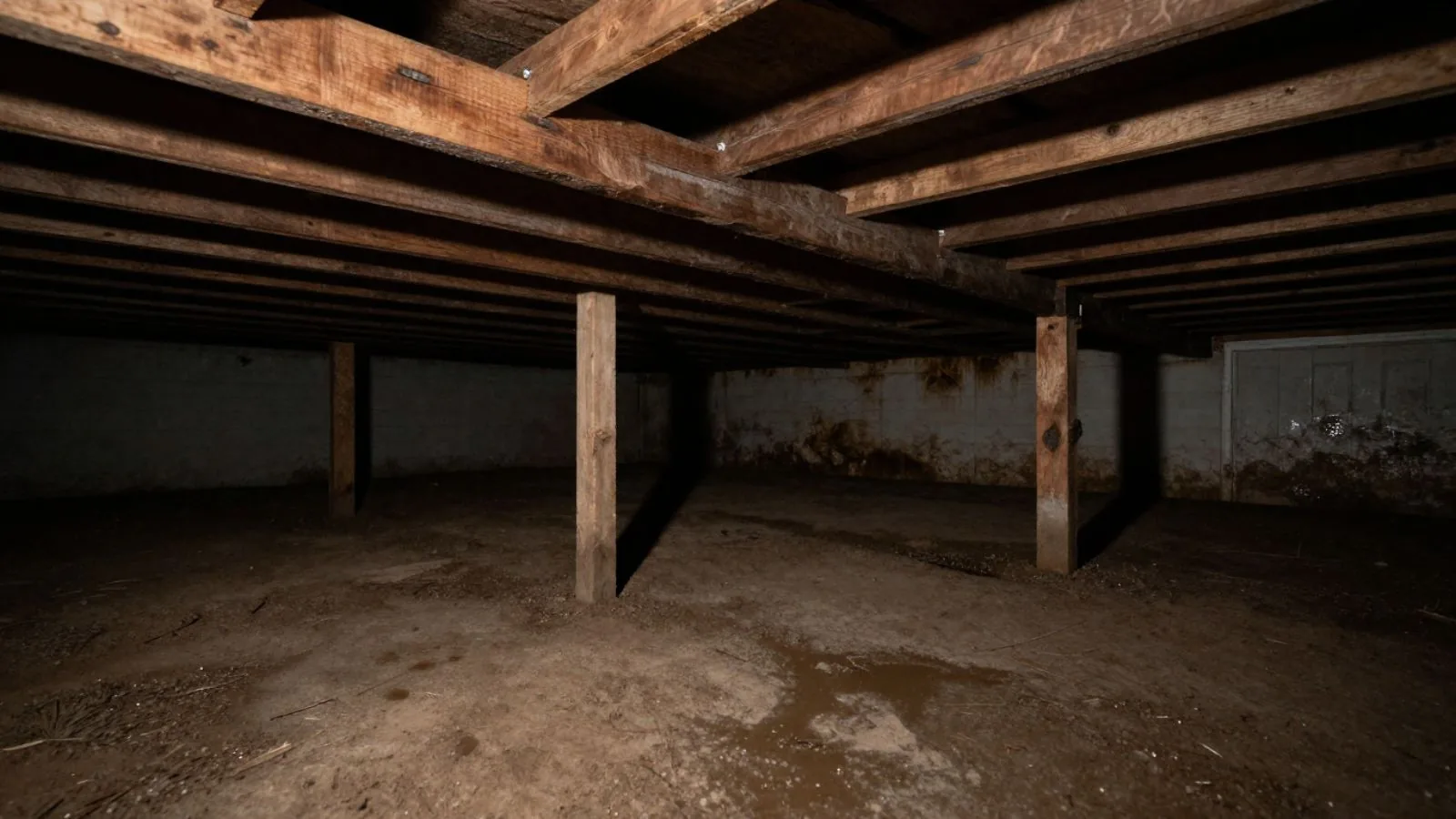
You fixed the leak and mopped the floor, but the room still smells like a damp basement. That musty odor is not left over from the water. It is a sign that something in the room is still wet, or that microbial growth has started on a damp surface.
This guide explains where the smell comes from, where moisture hides and what actually removes the odor. Cleaning the surface or masking the smell does not solve it.
Why a room smells musty after water
Musty odors come from microbes that grow on damp materials, and from gases they give off. Paper on drywall, wood framing, carpet pad and dust all feed them. They need moisture, and the smell is the sign of that moisture.
The U.S. Environmental Protection Agency advises drying wet materials within 24 to 48 hours to prevent growth. After that window the odds of lingering growth go up. A smell weeks after a leak means drying was incomplete or did not start.
Where moisture hides
Behind baseboards and drywall
Water wicks up the bottom of the wall and stays inside the cavity. The surface can feel dry while the paper behind it is damp.
Under carpet and pad
Pad acts like a sponge. Carpet may dry on top while the pad and subfloor stay wet.
Under hardwood or laminate
Water slips between boards and sits on the subfloor. Cupping is an early sign.
In a crawl space or basement slab
Moisture rises from the soil or slab and keeps floors above damp. See the crawl space page.
How to look for it yourself
- Follow the smell to the strongest spot and check the wall base and the floor edge.
- Look for stains, bubbled paint, swollen trim or a floor that has gone soft.
- Press a hand on the wall and floor. A cool, clammy feel suggests moisture.
- Check closets and cabinets against the wet wall. They trap damp air.
- Check the ceiling below any bathroom, kitchen or laundry.
A pin or pinless moisture meter and a thermal camera confirm what you suspect. A crew uses both, and readings show whether the structure is drying or still wet. The meter does not guess.
| What you notice | What it may mean | Next step |
|---|---|---|
| Smell strongest at the baseboard | Wet drywall base or wall cavity | Moisture reading, open the cavity if wet |
| Smell from carpeted floor | Wet pad or subfloor | Lift carpet, check pad and subfloor |
| Smell after rain only | Seepage, a crawl space or a roof leak | Find the entry point, then dry |
| Smell with warm, humid air | High humidity or a hidden leak | Check humidity and look for the source |
Only readings and a look inside confirm the cause.
Smell won't go away? Call and we will find the moisture.
☎ Call (740) 231-9132Safety while you search
Keep these in mind while you wait for help.
- Wear gloves and a mask when opening damp wall areas.
- Do not disturb large dark patches.
- Check with a physician about health concerns.
What actually removes the odor
The only lasting fix is to remove the moisture and the damaged material. That means drying the structure to its normal moisture level, removing wet pad or drywall that cannot be saved and cleaning surfaces that are dry. Sprays and air fresheners cover the smell for a few days.
Dehumidifiers help once the source is fixed. The carpet page and the wall and drywall page explain what is removed and what is dried.
Valley humidity and old foundations
The Hocking River valley holds moisture. The city of Athens sits at about 709 feet along the river and averages roughly 41.6 inches of precipitation a year, according to 1991 to 2020 climate normals. Wet seasons can keep basements and crawl spaces damp for weeks.
In Nelsonville, the Hocking River runs along the city and Monday Creek flows through the eastern part, so low houses near the water can stay damp. In Chauncey, where Sunday Creek meets the Hocking River, flooding has long been a risk.
Source type: Public reference (Wikipedia), NOAA 1991 to 2020 climate normals as reported there
When to worry about growth
If you see dark patches, fuzzy spots or a large stained area, tell the crew. Growth is a separate job from drying, and you should keep the area dry and limit disturbance. People with asthma, allergies or weak immune systems should ask a doctor before spending time in a musty room.
Do not scrub or sand a large affected area yourself. That can spread spores through the house.
Prevent the smell from coming back
- Fix leaks quickly and dry wet areas within a day or two.
- Run a dehumidifier in basements, aiming for humidity under about 50 percent.
- Keep gutters clean and downspouts pointed away from the foundation.
- Use bathroom and kitchen fans and vent dryers outdoors.
- Keep boxes and furniture an inch or two off basement walls.
Frequently asked questions
Why does my house smell musty after a leak I fixed?
Something is probably still damp, such as the pad, subfloor or wall cavity. Moisture readings find the source.
How long does it take for musty smells to appear?
Odor can appear within days when materials stay wet. Drying within 24 to 48 hours lowers the risk.
Can a dehumidifier alone remove the smell?
Only if the source is fixed and the remaining moisture is small. Wet pad or drywall usually needs to be removed or dried first.
Is a musty smell dangerous?
It signals moisture and possible microbial growth. People with asthma or allergies should be cautious. Ask a doctor about health concerns.
Will cleaning the carpet remove the smell?
Not if the pad or subfloor is wet. Cleaning treats the surface only.