

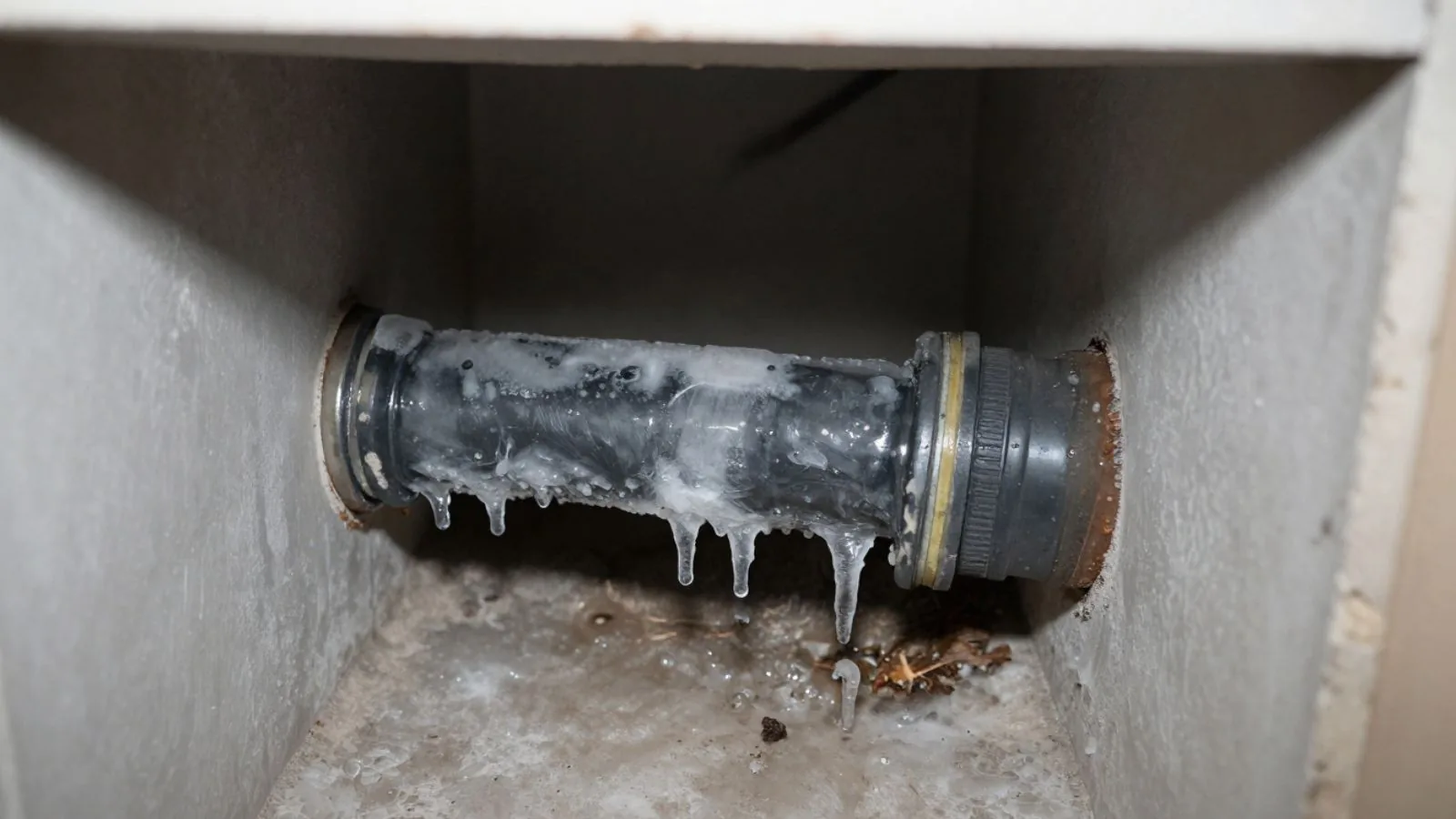
A burst pipe in January and a flooded basement in May have different causes but the same result: wet materials and a clock that is running. The calendar shapes which problems show up. This guide goes season by season and says what to check.
The patterns come from how southeast Ohio weather works, from the Hocking River valley setting and from the kinds of calls restoration crews take.
Winter: freezing and splitting
Pipes freeze when the air around them drops below freezing for long enough. They split when the ice expands. The break is often found only when it thaws and water pours out. Pipes in crawl spaces, garages, exterior walls and unheated rooms are the most exposed.
In a cold snap, let a faucet drip, open cabinet doors on exterior walls and keep the heat on. If you leave town, do not set the thermostat too low. The frozen pipe page explains what to do if a pipe is already frozen.
Winter in Athens
Athens averages about 17.6 inches of snow a year, and its mean daily minimum temperature is about 21.5 degrees Fahrenheit in January, according to 1991 to 2020 climate normals. The record low is minus 28 degrees Fahrenheit.
Rural homes in Millfield often have long water lines, crawl spaces and outbuildings with pipes, which means more places for a freeze to find a weak spot. In The Plains and the city, attic and garage lines are common culprits.
Source type: NOAA 1991 to 2020 climate normals as reported on Wikipedia
Spring: rain, runoff and rising water
Spring brings steady rain on thawing ground. Soil that cannot absorb more water pushes it toward foundations. Basements leak through the floor seam, window wells overflow and sump pumps run constantly. Creeks rise, and the Hocking River has a long record of flooding in the valley.
Check the sump pump before the wet season. See the basement page for what happens when water gets in, and the flood damage page for river and creek water.
Summer: storms, humidity and appliance leaks
Summer storms bring wind-driven rain, hail and downed limbs. A roof that was fine all winter can leak after a single storm. High humidity also condenses on cold surfaces. An air conditioner drain that clogs overflows into the ceiling or wall, which the AC leak page covers.
Water heaters, washing machines and dishwashers keep working through the summer, and a failed hose can run unnoticed during a vacation.
Fall: leaves, gutters and shutdown
Leaves clog gutters and downspouts, which spill water down walls and into foundations. Outdoor spigots and hoses should be disconnected before the first freeze. Test the furnace and clear vents. A quick check of attic insulation and exterior caulk is worth an hour.
| Season | Typical water problems | Quick check |
|---|---|---|
| Winter | Frozen and split pipes, ice dams, heating system leaks | Insulate exposed pipes, let faucets drip |
| Spring | Basement seepage, creek and river flooding, sump failures | Test sump pump, clear window wells |
| Summer | Storm leaks, AC drain overflow, appliance hoses | Inspect roof, clear AC drain line |
| Fall | Clogged gutters, outdoor spigot freeze-ups | Clean gutters, disconnect hoses |
Put these checks on your calendar once a season.
Water damage this season? Call the 24/7 line.
☎ Call (740) 231-9132Year-round risks
- Water heaters that are 10 or more years old can fail without warning.
- Supply hoses on washers and dishwashers can crack with age.
- Slow leaks under sinks and behind toilets go unnoticed for months.
- Roof flashing wears out and lets in water with any hard rain.
- Sewer lines can back up during heavy rain or after a root intrusion.
A look under every sink, behind each toilet and around the water heater twice a year is the cheapest insurance there is. Photograph what you see so you can compare later.
A simple yearly calendar
Pick one weekend each season for a water check. In late fall, disconnect hoses and insulate exposed pipes. In early spring, test the sump pump and clear window wells. In early summer, look at the roof and the air conditioner drain. In late summer, clean gutters before the leaves fall. Write the dates on a calendar so the task does not slide.
What to do when it happens anyway
The first steps are the same in every season. Stop the water, stay safe around electricity, move valuables and call the 24/7 line. Take photos before anything is moved. Starting the dry-out quickly keeps small losses small.
Frequently asked questions
Which season causes the most water damage in Athens?
Different problems peak in different seasons. Winter brings frozen pipes and spring brings flooding. No single season is free of risk.
How cold does it need to be for pipes to freeze?
Pipes in unheated spaces can freeze when the air stays below freezing for several hours. Wind and poor insulation make it worse.
When should I clean my gutters?
In late spring and again in late fall, and after major storms or heavy leaf drop.
Does summer humidity cause water damage?
It can add moisture, especially in basements and around cold pipes. Usually the bigger risks are storms and failed appliances.
What should I do before leaving home for a winter trip?
Keep the heat on at a safe temperature, shut off the main water if you will be gone a while and ask someone to check the house.