

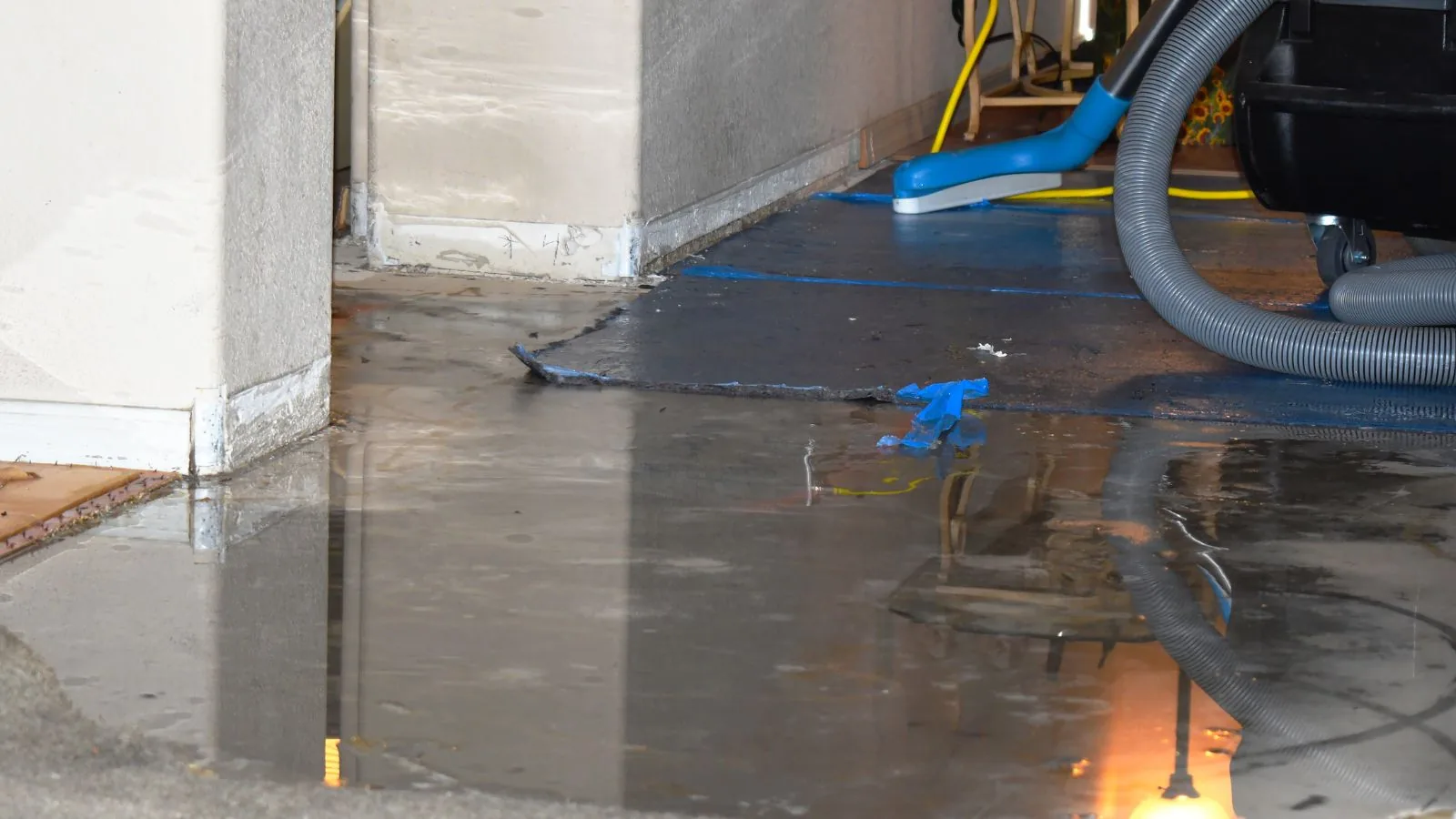
A water damage claim has two tracks that run at the same time. One track is physical: stop the water, remove it and dry the home. The other is paperwork: document the loss, report it and keep records. Both go better when you follow the same steps in the same order.
This guide lays out those steps for a home in the Athens area. It is general information, not insurance advice. Your insurer and your policy decide coverage, so follow their instructions where they differ.
Step 1: Make it safe and stop the source
Shut off the water at the fixture or the main valve. If water is near outlets or the panel, stay out and call the electric utility. Do not walk through standing water that could be energized. If a drain or sewer line is the source, keep children and pets away from the area.
If you cannot find the main valve, the burst pipe page explains where to look. Safety comes before photos.
Step 2: Document before you move anything
- Photograph and video every wet room, wide shots first and then close-ups.
- Photograph the source: the pipe, the appliance, the roof stain or the drain.
- Photograph damaged belongings and note the make and model of electronics.
- Record the date and time you found the water and when you shut it off.
- Keep a log of every call, including the person you spoke with.
Dated photos are the best evidence of when the loss began. Do not rely on memory. Back the files up to a cloud folder or send them to yourself by email.
Step 3: Start mitigation
Policies usually expect you to take reasonable steps to prevent more damage. Calling a crew to extract water and dry the structure is one of those steps. Crews take moisture readings, remove materials that cannot be saved and set drying equipment.
Starting early usually lowers the final cost, because wet drywall and flooring get worse each day. The structural drying page explains the equipment.
Water in the house? Call the 24/7 line to start mitigation.
☎ Call (740) 231-9132Step 4: Report the loss
Call your insurer or agent and report the loss as soon as you can. Say what happened, when you found it and what you have already done. Ask for a claim number, an adjuster's contact and the documents they need. Ask what they want done with damaged items.
Ohio has rules for how insurers handle claims, found in Ohio Administrative Code rule 3901-1-54. They include time limits for acknowledging and deciding claims. Ask your insurer for its timeline in writing.
Step 5: Meet the adjuster
Walk the adjuster through each wet room and the source. Share your photos, the crew's moisture readings and any plumber's report. Ask how the adjuster will measure the loss and when you will see the scope.
If the home is not livable, ask whether the policy pays for temporary housing. Keep receipts for hotel stays, meals above your normal costs and any emergency purchases.
| What to keep | Why it helps |
|---|---|
| Photos and video with dates | Show the extent and timing of the loss |
| Moisture readings and drying logs | Show that the structure reached a dry standard |
| Plumber or roofer invoices | Show the cause and the repair |
| Receipts for emergency costs | Support reimbursement for temporary expenses |
| Claim number and call log | Keep the process organized |
Keep paper and digital copies until the claim is closed.
Why records matter here
After the June 28, 1998 flood on Federal Creek, damage in Amesville led to FEMA-funded demolitions on the village's south side and the creation of Gifford Park. Disaster aid and insurance are separate systems, and each asks for its own proof of loss.
Floods in the Hocking River valley are not covered by standard homeowners policies. If your property is in a mapped flood hazard area, check the FEMA flood map and ask your agent whether a flood policy applies. Residents of Amesville and Nelsonville live close to creeks and the river and should confirm coverage before storm season.
Source type: Public reference (Wikipedia), FEMA flood map program
Step 6: Repair and close out
Once the structure is dry, rebuild work begins. Get the scope in writing and compare it with the adjuster's numbers. Ask the contractor to explain differences. If the adjuster supplements the claim, send the extra documents promptly.
Keep final invoices, warranty papers and a final photo set. Before you sign any release, read it carefully and ask what it covers.
Common mistakes
- Throwing away damaged items before photographing them.
- Waiting to start drying until the claim is approved.
- Signing an assignment or release without reading it.
- Repairing a pipe without keeping the old part or the plumber's note.
- Assuming a verbal promise from anyone is binding.
If you are unsure about an offer, ask for it in writing and give yourself time to compare. A restoration crew can explain the work. Only your insurer can explain coverage.
Frequently asked questions
How soon should I report a water damage claim?
As soon as you can after the loss. Many policies require prompt notice, and delay can make it harder to show what happened.
Do I need approval before I start drying?
Usually no. Policies generally expect you to protect the home from further damage. Report the claim the same day and keep records of what you do.
What should I photograph for a claim?
The source, every wet room, damaged belongings and any visible stain lines. Take wide shots and close-ups, and keep the dates.
Can the restoration company deal with my insurer?
A crew can share documentation, but the claim is between you and your insurer. You stay in charge of decisions.
What if the adjuster's estimate is lower than the crew's scope?
Ask both to explain the difference in writing, and send any additional documents. You can ask your insurer about its review process.